Click the image to visit TruthToPower.tv and order The Warning on DVD Watch the trailer here
Contribute To OOIBC ▼
This is a non-profit site that requires much time and effort to maintain. Please help us continue the work we do here by donating whatever you can afford, today.
Petition ▼
More than 44,000 people have signed this petition. Click the Badge to see the latest count and sign the petition.
Click Get Badge to embed the Badge on your site.
Formal Petition to Attorney General Eric Holder to appoint a Special Prosecutor to investigate and prosecute any and all government officials who have participated in War Crimes.
Translate ▼
Search OOIBC ▼
Recent Posts ▼
The Myth of AQI Fighting al-Qaeda in Iraq is the last big argument for keeping U.S. troops in the country. But the military´s estimation of the threat is alarmingly wrong. --By Andrew Tilghman
Thousands of U.S. troops will remain in Iraqi cities at local security stations after the summer deadline to have combat troops out of the urban areas, the top U.S. commander in Iraq said Saturday.
The report continues,
Gen. Raymond Odierno told reporters that the troops would serve as training and mentoring teams, and thus would not be included in the mandate to pull combat troops from the cities. That mandate is included in the recently approved U.S.-Iraq security agreement.
My first thought was "in your face Iraqi scum," as in the USA! USA! shouters saying, "the US doesn't really have to adhere to its agreements... because we're the superior USA!"
My second thought was, these little security stations will be sitting ducks. It's only a matter of time before one is over run and every American in it is liquidated. Then we'll have a big step backwards; we're all familiar with such events. (Hopefully I'm wrong).
My final thought drifted back to the prediction I made back, coincidentally as I check the date, two years ago today in a piece entitled Iraqization and Predicted Length of Iraq War.
Paul Jay speaks to Leila Fadel, Baghdad Bureau chief for McClatchy Newspapers. They speak on Iraqi perception of the US-Iraq Status of Forces Agreement (SOFA).
The Arabic-version of the agreement is firm on the United States completely withdrawing all aspects of its occupation of Iraq by December 31, 2011. Fadel says that most Iraqis are suspicious of the Agreement and of their government's dedication to ending the US-led occupation firmly.
Fadel also talks about Muqtada al- Sadr and his supporters' reaction to the Agreement as well as the fall in violence in Iraq in the past year.
Leila Fadel is the chief of the Baghdad bureau of McClatchy Newspapers. She has covered the war in Iraq for Knight Ridder and now McClatchy on and off since June 2005, as well as the 34-day war in Lebanon between Hezbollah and Israel in the summer of 2006. Prior to joining the McClatchy team she worked at the Fort Worth Star-Telegram as a crime and higher education reporter.
Fadel graduated from Northeastern University in Boston in 2004 and has lived in Lebanon and Saudi Arabia. She speaks conversational Arabic. She was named print journalist of the year by the Houston Press Club for her work in 2005 and won a Katie Award from the Dallas Press Club in 2006 for her portfolio of work.
Her Iraq reporting won her Print Journalist of the Year honors from the Houston Press Club citing her work from "Bedford (Texas) to Baghdad."
In Baghdad as I write this it is early Thursday evening, about 7:00 pm Thursday November 27, 2008. Add 8 hours to current US eastern standard time to calculate Baghdad time.
It is also about five and half years since George Bush ordered the invasion of Iraq, claiming falsely to want to "liberate" Iraq, while beginning the occupation that has resulted in the deaths of more than a million Iraqis and more than four thousand Americans.
Since the invasion Iraqis belonging to all social factions and walks of life have been trying to throw their occupiers out of the country. They may finally, after all these years, be on the verge of doing exactly that.
Yesterday, in US-Iraq: The Big Picture, "Professor Michael Schwartz compare[d] the terms of the US-Iraq security pact - assuming the US will abide by them - with the initial, grandiose neocon plan which would have Iraq as an American colony peppered with US military bases projecting power all over the Middle East. He stresse[d] it's unlikely the Pentagon and US Big Oil will abandon their dreams of Iraq domination."
Operation Iraq Liberation (OIL) would have been an apt codename for Bush's invasion, but under any codename and whatever the lies and justification used, Iraqis have had enough, and the whole criminal adventure has also resulted in the repudiation and collapse of all the grand plans of Bush, the neocons, and PNAC, although it has yet to result in the arrest and trial of George Bush for war crimes. But grand plans or no, the oil men will not quit, and are still determined to control whatever oil resources in Iraq they can.
Neither will Iraqis quit, however, and the incoming administration of President-elect Barack Obama would do well to remember the power and persistence of popular resistance movements, both in Iraq, and at home, and not make a similar mistake in Afghanistan, and remember that it was not the oil companies who won him election, but popular movement.
The Real News and Michael Schwartz examine Iraq popular movement resistance to the US-Iraq security pact and how instrumental it has been for years in blocking the Bush administration agenda:
Real News: November 27, 2008 Iraq: from SOFA to resistance Michael Schwartz examines the Sadrists' reaction to the US-Iraq security pact
In the final part of this series, professor Michael Schwartz stresses how Iraqi popular resistance was crucial from the beginning in blocking the Bush administration agenda, and how the Sadrist movement led by Muqtada al-Sadr may decide to fight the occupation beyond the signing of the security pact.
Michael Schwartz is a professor of Sociology and the founding director of the Undergraduate College of Global Studies at Stony Brook University (SUNY). He has written extensively on the war in Iraq for publications including Mother Jones, Asia Times, ZNet and TomDispatch and is the author of War Without End: The Iraq War in Context (Haymarket, 2008).
How long it will last is anybody's guess. Is a civil war Bush's parting gift to Iraqis?
The Real News analyzes the agreement in a discussion with Sabah al-Nasseri, Professor of Political Science (Middle East Politics) at York University, Toronto, and previously Lecturer of Political Science at the J.W. Goethe University, Frankfurt.
Sabah al-Nasseri: Strong nationalist movement has mobilized against the agreement, and they have guns.
The Iraqi cabinet agreed by a vote of 27-1 on Sunday to approve the newest US draft of the Status of Forces Agreement between the two countries.
The agreement speaks to a variety of issues concerning the occupation, including the complete withdrawal from Iraq of US forces by the end of 2011. Moreover, it includes a promise from the US to not use Iraqi territory as a launch pad to attack inside other Middle-eastern countries, as it did in late October during a raid on a village inside Syria.
Sabah al-Nasseri believes that the Iraqi parliament will eventually turn down the agreement for political reasons, in the interests of securing one with Barack Obama when he comes to power in January.
The timing is important as the Iraqi provincial elections, which are extremely significant given the power granted provinces under the Iraqi constitution, will take place on January 31.
Sabah believes that the importance of fairing well in those elections will force the parliament to reject an agreement which has received the rebuke of numerous groups, both religious and secular, who have organized massive protests over recent weeks.
One piece of the agreement that very few people are talking about, which Sabah believes has angered many nationalists of all stripes, is the labeling of any armed resistance against occupation forces as terrorists, thereby criminalizing their activities under Iraqi law.
Sabah believes that the most recent violence in Iraq was carried out by secular nationalists who are opposed to the deal, given that the targets of the attacks were all US and Iraqi government elements.
Sabah, who was born and raised in the Southern Iraqi city of Basra, reiterates his support for an immediate withdrawal of all foreign occupiers, believing that the violence in Iraq stems from the occupation.
On the flip, Tina Susman reporting from Baghdad for the LA Times, has put together A guide to the U.S. security agreement with Iraq: As Iraq's parliament plans to vote on a deal that would set Dec. 31, 2011, as the end date for U.S. occupation, The Times answers questions about the pact. By Tina Susman, LA Times Staff Writer November 18, 2008
Reporting from Baghdad -- Iraq's parliament Monday began considering a security agreement that will determine the future of American forces in the country and, if approved, set Dec. 31, 2011, as the end date for the U.S. occupation of Iraq. The Cabinet approved the pact Sunday. The next step is a vote on the accord by the 275-seat legislature, expected in the next week. Here are answers to some of the questions most often asked about the pact.
What is the agreement?
The Status of Forces Agreement, commonly known as SOFA, is the legal documentation needed for American troops to remain in Iraq past Dec. 31 of this year, the date the United Nations mandate governing their presence expires. SOFA deals strictly with the security aspects of the U.S. presence. A separate agreement known as the Strategic Framework covers economic, cultural, technical and other issues. It is part of the package of legislation before the Iraqi parliament that includes SOFA.
How was the deal reached?
The process began more than a year ago when leaders of both countries declared their commitment to drafting the framework for a long-term relationship. Formal talks were launched in March. At the end of May, the talks reached what both sides have described as a dead end over contentious issues. Negotiators began fresh discussions that lasted through the summer and led to a SOFA draft in October. Iraq's Cabinet demanded about 100 changes to the draft, some small and some large. After more negotiations, a final deal was reached this month. Prime Minister Nouri Maliki and his Cabinet gave their approval over the weekend and passed it on to the parliament.
What were the sticking points?
The major ones involved timing for the withdrawal of American forces, and the question of whether American troops could be prosecuted by Iraqi courts for alleged crimes committed against Iraqis. Other areas of disagreement involved the future of Iraqi detainees held by U.S. forces in Iraq, and the question of whether Iraq has the right to inspect weapons and other packages arriving in the country for American troops.
How were the main issues resolved?
U.S. officials made a major concession on the timing question. They originally rejected a firm withdrawal date and suggested a vague "time horizon" for the U.S. pullout, based on conditions on the ground. They also spoke of extending the U.S. presence until 2015. The final plan calls for U.S. combat troops to pull out of Iraqi cities, towns and villages by next July, and for all U.S. troops to be gone from the country by Dec. 31, 2011. The dates are not "conditions-based." Iraq gave way on jurisdiction, dropping its demand for the right to try American troops for alleged crimes committed against Iraqis. Instead, a joint U.S.-Iraqi committee will examine individual cases involving Americans accused of committing such crimes while off base, and decide who has jurisdiction. The Americans agreed to relinquish control to Iraqi authorities of about 16,000 Iraqis held in U.S. custody in the country; and Iraq won the right to inspect incoming packages.
Who opposes the pact and why?
The leading critics are Shiite Muslim cleric Muqtada Sadr; the main Sunni Arab political bloc in parliament; and Iran and Syria. Sadr has long demanded the ouster of American forces and says they should leave when the U.N. mandate expires next month. Iran and Syria, which Washington accuses of fomenting violence inside Iraq, also want U.S. forces to leave as soon as possible. Sunni leaders have said the pact is too important a matter not to be voted on in a public referendum.
Could opponents derail the plan?
It's doubtful they could stop it in parliament, because neither the Sadr bloc nor the Sunnis have enough seats to vote it down. However, the Sadrists made it clear Monday that they would attempt to stall debate by demanding legislation that could require a two-thirds majority vote, rather than a simple majority, to approve the pact. The Sunnis could derail the pact if Vice President Tariq Hashimi, a Sunni who sits on the nation's three-member Presidency Council, opted to use his veto powers to prevent it from being signed into law once passed by parliament. That would force U.S. and Iraqi officials to scramble for an alternative plan.
Does the pact affect non-U.S. troops in the country?
No. There are only a few thousand non-American troops here now, and most plan to leave by the end of the year. The biggest non-U.S. force is Britain's, which numbers about 4,000 and is negotiating its own pact with Iraq. What happens now?
Parliament had its first "reading" of the pact Monday, when it received the package but did not discuss it. Debate begins this week, with a vote anticipated by Nov. 25.
What if it fails?
If it fails, U.S. forces will have to halt operations in Iraq at 12:01 a.m. on Jan. 1, unless the U.N. mandate could be extended beforehand.





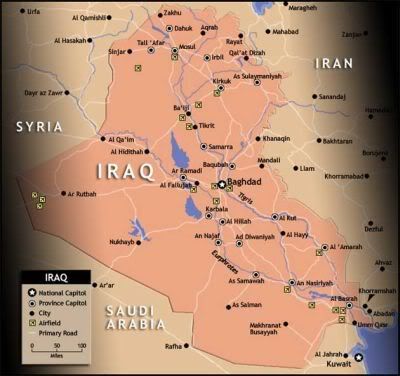
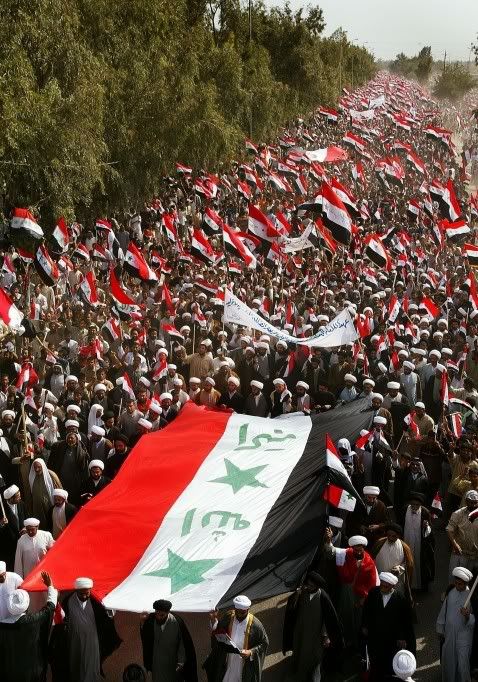 In Baghdad as I write this it is early Thursday evening, about 7:00 pm Thursday November 27, 2008. Add 8 hours to current US eastern standard time to calculate Baghdad time.

