Thursday, February 19, 2009


Congress members: Lobby us to get out of Iraq

This is not exactly a man-bites-dog story, but at least three members of Congress have expressed their support for a campaign to contact members of Congress and urge them to end the occupation of Iraq.

And a fourth has joined protesters at their regular vigil.

Representatives Barbara Lee, Lynn Woolsey, and George Miller -- all California Democrats -- have written the Raise Hell for Molly Ivins campaign to encourage it to continue raising hell. Meanwhile, Rep. John Conyers, a Michigan Democrat, joined a vigil in Wyandotte, MI. (He's at left in photo)

The Ivins campaign has been urging people to use the Third Friday of every month -- Iraq Moratorium day -- to contact Congresspeople in their home offices and ask them to get US troops out of Iraq. Friday, Feb. 20, is Iraq Moratorium #18.

"Please keep fighting," wrote Lee, a longtime opponent of the Iraq war.

Late last fall, Woolsey, Lee and Maxine Waters organized 92 members of Congress to sign a letter putting then-President Bush on notice that "we will only authorize funding for Iraq that is used for the safe and orderly redeployment of our troops and military contractors," Woolsey said. "We will have many serious issues to deal with in the coming months under a new President, but I will not forget that ending this occupation must be a priority for this Congress and for this nation," her letter said.

Miller cited President Obama's promise to bring the troops home from Iraq in 16 months, and said he and others will be working to accomplish that. He also "heartily endorsed" the Ivins efforts.

Miller, however, did not sign the Woolsey letter, which had its critics, too, including David Swanson of AfterDowningStreet.

The proof, of course, will be in the pudding. Letters and statements from members of Congress are encouraging, but actions speak louder. All three have a track record of opposition to the war.

Miller voted against the war to begin with, and said this in 2006:

Mr. Speaker, there is no more pressing issue in our country today than bringing an end to the war in Iraq as quickly as possible.


But Miller's recent letter to the Ivins campaign reads more like a polite acknowledgement of contact from a constituent, blames everything on Bush and says Obama will change things.

So, don't set aside your skepticism, or even your cynicism.

But do try to meet with, talk with, and confront your member of Congress personally when they are back in the district. And ask them for a commitment to end the war and occupation. Not a statement saying how much they admire what you do -- a commitment about what they will do.

Friday, Feb. 20, marks the 18th monthly observance of the Iraq Moratorium, a grassroots movement uniting people and groups who act to call for an end to the war and occupation of Iraq.

Many activities, individual and collective, large and small, are planned. The Iraq Moratorium website includes a listing as well as ideas for individual actions.

If your plans aren't listed there, please submit them here.

Afterward, please send a brief report of what you did, with photos or videos if they're available. Here's the easy form to do that: Form. It only takes a minute, and sharing your experiences can inspire others to act.

One more thing: The Iraq Moratorium, an all-volunteer operation, is a low budget organization. But it can't operate as a no-budget organization. If you can, please make a donation of whatever you can spare, knowing that we will put it to immediate and effective use in the cause of peace. Here's the link.

Thanks for all that you do, on Friday and every day, to help bring peace.


There's more: "Congress members: Lobby us to get out of Iraq" >>

Sunday, February 15, 2009


THE SURGE, PART DEUX

.
OBAMA DOES BUSH

FROM THE GENERALS WHO BROUGHT YOU 50 YEARS IN IRAQ,
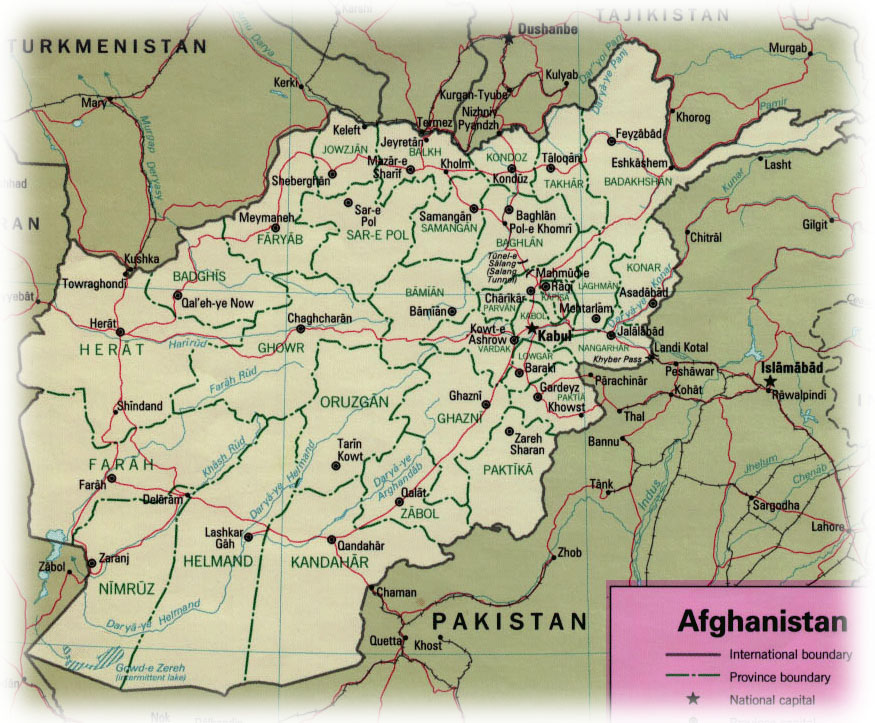
HERE'S 50 MORE IN AFGHANISTAN


(click to enlarge maps)
Former Soviet Republics Bordering Afghanistan


Waziristan


Swat Valley


Meanwhile, Back In Babylon, Things Fall Apart; And In Pakistan, A Fundamental Deal

The first Marines went over the wall, parlez-vous. Hm. Where have we heard that before? Oh, yeah, in the "War To End All Wars," almost a hundred years ago. Think how many died believing their sacrifice might end war forever. Makes you wonder if we're not always delusional, going into a war.

You'd think, after seven years in Iraq, the scales would have fallen from our eyes. Anyone who believes that we can ever leave there without sizable portions of whatever is left of it falling into chaos, civil war and terrorism is plainly delusional. And now we're going to do the same thing in Afghanistan. Why? Because the very same generals who managed the mess in Mesopotamia are insisting upon it. And if they don't get their way, again, they're going to try to overthrow Obama in the corporate media. So, what choice does Obama have but to do their bidding? Grow a pair?

(continued)
.


.

He's pretty much doing what the new Pakistani PM is doing: Giving in to the other side. Yousuf Raza Gilani just did a deal with the Pakistan version of the Taliban to give them official control of their breakaway region on the border of Afghanistan, Shariah Law and all. (Not exactly Ladies Night in Pakistan tonight.) This region is next door to the home base of Al Qaida and much of the Afghan Taliban. So, here we are reliving the Cold War, where the worst people on both "sides" of an imaginary conflict pretty much ran the show. That put us all under "nuclear umbrellas" for almost fifty years, until the financial weight of it brought down both sides. Hmmmm.

Of course, both sides are already down, financially, in this new "drole de guerre." So, what, exactly, is going to bring about glasnost and perestroika this time? You could try asking Vladimir Putin, the ex(?)-KGB agent & FSB chief in Soviet Russia. He recently outmaneuvered the U.S. in Kyrgyzstan, bribed them to kick us out, then offered to let us use Russian territory as our sole northern access to the territory of his old buddies, the Afghans. They're probably thrilled. But why would the Rooskies want to help us build a natural gas pipeline to compete with their European lines? Are they trying to sabotage the pipe, or are we going to end up finishing the Russians' drive for a warm-water port in the Indian Ocean or the Arabian Sea for them? Cuz, you know, I think our troops deserve to know which country they're going to die for. I'm just sayin'.


EMAIL THE PRESIDENT


EMAIL THE SENATE MAJORITY LEADER


EMAIL THE SPEAKER OF THE HOUSE


EMAIL THE DEMOCRATIC PARTY CHAIRMAN


MCCLATCHY NEWSPAPERS
"Dozens of Shiite pilgrims die in resurgent violence in Iraq"
"The Surge is working! The Surge is working! The Surge is BOOOM!!!

' More than three dozen Shiite Muslim pilgrims were killed Friday when a suicide bomber blew herself up at a crowded roadside tent in central Iraq , marking the first time in more than a month that a suicide bomber carried out such a deadly attack. The blast — the third straight day of intense violence — threatens to set back the security gains Iraq has made in recent months as Washington prepares to draw down U.S. troop levels. In the past three days, car bombings, political assassinations and suicide attacks — including Friday's — have claimed the lives of at least 72 people. The climb in violence comes after a stretch of relative calm following five years of sectarian warfare. Much to the relief of many Iraqis, the Jan. 31 election passed without major violence. However, the vote's pending outcome — results should be released next week — could be exacerbating tensions among rival sects and politicians. Despite a heightened security presence in Karbala and beyond, attacks on Shiite Muslim pilgrims have persisted. The attacks targeting Shiite Muslim pilgrims coincide with a spate of attacks directed at Sunni politicians and others in the north. In Mosul , a volatile city to the north where Iraqi security forces have yet to secure control, sectarian tensions between Sunni Arabs and Sunni Kurds have intensified. In the past few days, Mosul has seen a mounting death toll. Among the dead: Four policemen, one Sunni politician, one civilian, and an Iraqi soldier. And on Monday, four American soldiers and their interpreter were killed at a checkpoint when a vehicle with a makeshift explosive blew up nearby. '

AUSTRALIA.TO
"Troop Increase in Afghanistan Differs from Iraq Surge "
Permanent "surge"?
' When discussing an increased troop commitment in Afghanistan, the chairman of the Joint Chiefs of Staff cautions that it won't be a carbon copy of the troop surge that proved so successful in Iraq. "I actually don't use the term 'surge,' and I don't think it's right, because the 'surge' term has an implication that it is going to go up, then come down," Navy Adm. Mike Mullen told reporters returning with him today after a two-day trip to Fort Drum, N.Y., and Ottawa. That's what happened during the troop surge in Iraq, when 33,000 additional troops began deploying in early 2007 to boost security in Baghdad and Anbar province. Violence quickly decreased, and the last of the five original surge brigades redeployed in July 2008 after a 13-month deployment. But Mullen has made no secret of the fact that he considers Afghanistan a tougher mission than the one in Iraq, and the challenges more daunting. As a result, he said there's no set timetable anticipated for the additional 20,000 to 30,000 troops Army Gen. David D. McKiernan, commander of NATO and U.S. forces in Afghanistan, has requested to improve security there, Mullen said. "I don't know how long it is the troops will be there," Mullen said. "I think we will keep troops there long enough to provide the security and sustain it at a time when we will continue to build the Afghan security forces." '

YAHOO NEWS
"First wave of U.S. troops in Afghan surge engages in combat"
Giving in to the bad guys I.
' LOGAR PROVINCE, Afghanistan – Close to 3,000 American soldiers who recently arrived in Afghanistan to secure two violent provinces near Kabul have begun operations in the field and already are seeing combat, the unit's spokesman said Monday. The new troops are the first wave of an expected surge of reinforcements this year. The process began to take shape under President George Bush but has been given impetus by President Barack Obama's call for an increased focus on Afghanistan. U.S. commanders have been contemplating sending up to 30,000 more soldiers to bolster the 33,000 already here, but the new administration is expected to initially approve only a portion of that amount. White House press secretary Robert Gibbs said Monday the president would decide soon. Militant activity has spiked in Logar and Wardak over the last year as the resurgent Taliban has spread north toward Kabul from its traditional southern power base. Residents say insurgents roam wide swaths of Wardak, a mountainous province whose capital is about 35 miles from Kabul. Haight said he believes the increase of militant activity in the two provinces is not ideologically based but stems from poor Afghans being enticed into fighting by their need for money. Quoting the governor of Logar, the colonel called it an "economic war." Logar Gov. Atiqullah Ludin said at a news conference alongside Haight that U.S. troops will need to improve both security and the economic situation. "There is a gap between the people and the government," Ludin said. "Assistance in Logar is very weak, and the life of the common man has not improved." Ludin also urged that U.S. forces be careful and not act on bad intelligence to launch night raids on Afghans who turn out to be innocent. It is a common complaint from Afghan leaders. President Hamid Karzai has long pleaded with U.S. forces not to kill innocent Afghans during military operations and says he hopes to see night raids curtailed. Pointing to the value of such operations, the U.S. military said Monday that a raid in northwest Badghis province killed a feared militant leader named Ghulam Dastagir and eight other fighters. Other raids, though, have killed innocent Afghans who were only defending their village against a nighttime incursion by forces they didn't know, officials say. Haight cautioned last week that civilian casualties could increase with the presence of his 2,700 soldiers. "We understand the probability of increased civilian casualties is there because of increased U.S. forces," said the colonel, who has also commanded Special Operations task forces in Afghanistan and Iraq. '

TIME MAGAZINE
"Will Pakistan's Shari'a Pact Calm or Inflame the Tribal Regions?"
Giving in to the bad guys II.
' In a desperate move to deal with an intractable radical insurgency, the Pakistan government says it will impose a form of Islamic law in the area of Swat Valley in the northwestern corner of the country. As a result, Islamabad's faltering military campaign there has been put on hold, and the militants have agreed to a tentative ceasefire. But many observers fear that, far from calming the conflict, the government has capitulated to the Islamist guerrillas and has set a worrying precedent — one that will surely displease some U.S. officials who want the government to take a harder line against militants. It is, however, a highly controversial and risky course. A previous peace deal failed within months, after giving the militants the space to regroup and sweep away earlier military gains. "It is an attempt on the part of the government to win over a section of religious extremists," says Hasan Askari-Rizvi, a military analyst. "The idea is that if they are pulled out of the struggle, they will cooperate with the government and help isolate the militants. It may have been a good idea if the Taliban were on the run, but they're well entrenched." It is unclear what Sufi Mohammed's precise role will be, or how much leverage he has in Swat. The militant leader emerged as a force in the mid-1990s, when his loyalists, sporting black turbans, seized control of buildings and courthouses before the government of then Prime Minister Benazir Bhutto was able to tame the revolt and sign a truce. In late 2001, Sufi Mohammed led thousands of young men — including Fazlullah — to Afghanistan to fight western forces who had invaded in the wake of the 9/11 attacks on the United States. Upon their return, he was arrested and imprisoned. His release last year was contingent on his disavowal of militancy and an agreement to cooperate with the government. '

MCCLATCHY NEWSPAPERS
"Is the U.S. repeating Soviet mistakes in Afghanistan?"
Those who do not remember the past...
' Some Afghan experts are worried that the United States and its NATO allies are making some of the same mistakes that helped the Taliban's forerunners defeat the Soviet Union after a decade-long occupation that bled the Kremlin treasury, demoralized Moscow's military and contributed to the Soviet Union's collapse. Among the mistakes, these experts said, are relying too heavily on military force, inflicting too many civilian casualties, concentrating too much power in Kabul and tolerating pervasive government corruption. Violence and ethnic tensions will worsen, they warned, absent a rapid correction in U.S.-led strategy that improves coordination between military operations and stepped up reconstruction, job-training and local good governance programs. "We have not justified democracy. We have not justified human rights. We have not justified liberalism," said Azziz Royesh, a political activist, educator and former anti- Soviet guerrilla. "Afghans don't like the Taliban . But we haven't shown them a better option." "I see a time when again there could be thousands of unorganized insurgencies around the country," he cautioned. "The foreigners are the ones who will be targeted. If we don't bring change here, these kinds of incidents will add to the Taliban insurgency." Previously secret Soviet documents made public in English for the first time on Saturday reveal that Obama is facing some of the same problems that compelled former Soviet leader Mikhail Gorbachev to order a withdrawal from Afghanistan. The documents, posted on the George Washington University's National Security Archive Web site, show that Gorbachev decided in 1985 to end the Soviet occupation after realizing that Moscow couldn't win a military victory, a point that Obama and senior U.S. commanders repeatedly stress. '

THE CHRISTIAN SCIENCE MONITOR
"Moscow again eyes Afghanistan 20 years after retreat"
They're B-A-A-A-A-A-C-K ! ! !
' "The consensus of Russian experts is that there is no winning strategy for the US and NATO in Afghanistan," says Fyodor Lukyanov, editor of Russia in Global Affairs, a top Moscow-based foreign policy journal. "Most believe that, sooner or later, Afghanistan's neighboring countries will face serious challenges from a possible revived Taliban. It means we need to work with the Americans, and find common approaches, but we need to make our own preparations, too." Last week, after receiving a $2.3 billion package of loans and aid from Moscow, Kyrgyz president Kurmanbek Bakiyev ordered the US to vacate Manas, the last of the military bases on former Soviet territory that Russia had acquiesced to following the Sept. 11, 2001, attacks. Also last week, Russia pushed its regional alliance, the six-member Collective Security Treaty Organization, to beef up its joint rapid reaction force to 10,000 men aimed at combating terrorism and drug trafficking. And next month, the Shanghai Cooperation Organization, a regional alliance led by Russia and China, will convene a special conference on Afghanistan to explore ways to strengthen the group's relations with Kabul, which could include Russian arms sales and military advice for the first time since the Soviet withdrawal, experts say. Cooperating with the US may, in the future, take a back seat to Moscow's own regional offensive, some say. "Russia urgently needs to create friendly regimes in central Asia and a strong, unified border defense," says Alexei Mukhin, director of the independent Center for Political Information in Moscow. "We're very willing to work together with NATO against our common enemy, the Taliban, but we've seen from past experience that this does not produce positive or lasting results for us. The Kremlin is certain that Russia needs to act decisively on its own" to ensure Russia's security if Afghanistan collapses again, he says. '
.
.


There's more: "THE SURGE, PART DEUX" >>

Thursday, February 12, 2009


Americans Want KBR Debarred From Government Contracts

There is a firestorm brewing in the blogosphere demanding that KBR and Halliburton be debarred from any future government contracts.

"The Federal Acquisition Regulation (FAR) clearly states that a conviction or "adequate evidence" of bribery may be grounds for suspension or debarment from federal contracting." says the Project on Government Oversight (POGO).

The Project on Government Oversight (POGO) did a bang up job researching and linking to all the pertinent supporting documents so I am not going to reinvent the wheel. Click HERE to go to their article.

Get informed and then contact your Senators and Congresspeople and demand that KBR and Halliburton be debarred from any future Government Contracts and that current contract awards be reviewed.

Something really stinks here!

Ms Sparky


There's more: "Americans Want KBR Debarred From Government Contracts" >>

Tuesday, February 10, 2009


What did you do to end the war, Daddy?

When your child asks, in 10 years, "What did you do end the war in Iraq, Daddy? (Mommy?), what are you going to say?

"Well, we worked really hard at it for years. We marched, and wrote letters, and held vigils, and called up Congress, and did a lot of other stuff -- oh, and a lot of meetings, too.

"So did you keep it up until you made them end the war?"

"Well, not exactly. See, we worked to elect this guy who was running for president and said he would end the war if he got elected. And he won.

"So he ended the war and then you could quit protesting?"

"Something like that. More like we quit protesting and hoped he would end the war."

"Did it end?"

"Yes, but not right away. It took a few years. Quite a few, actually."

"Do you think maybe you quit too soon?"

"It's getting pretty late. How about a bedtime story?"

* * *

Friday, Feb. 20, is Iraq Moratorium #18.

It is not the time to opt out of the effort to end the war and occupation of Iraq. It is a time to turn up the heat, or, at a minimum, to keep things simmering. Do something, large or small, to show you want US troops home.

And, whatever you're planning, please list it here.

Members of Congress are going to be home next week for a recess. It's a great chance to tell them face-to-face that we want our troops home. And talk to them about spending priorities, using the billions we are wasting in Iraq to do something constructive.

From United for Peace and Justice, the nation's biggest antiwar coalition:
The time is now to mount a campaign to cut the military budget by ending the war and occupation of Iraq and redirect the spending of our national budget.This is also an opportunity for the antiwar movement to work with economic and social justice groups in organizing joint delegations.

Don't go to their offices alone! Join with labor and community groups to make the first recess of the new Congress the beginning of a surge to compel them to end the war, cut the military budget and fund human needs.

If your Congressional representatives refuse to meet, or opposes the need for urgent emergency government action to respond to the economic crisis or bringing all the troops home: picket or vigil outside their office and call the press!

The opening of the debates on priorities for the next Federal Budget will follow this Congressional recess. We need to make our priorities clear! Ending the wars and occupations in Iraq and Afghanistan are the first steps to making larger cuts in the military budget and change the priorities of Federal spending.
That's just one idea. There are hundreds of things you can do to observe the Iraq Moratorium. Need ideas? Visit the website: IraqMoratorium.com.

What are you and me gonna do to end the war, Daddy and Mommy?


There's more: "What did you do to end the war, Daddy?" >>

Sunday, February 8, 2009


POLLING THE VICTIMS OF GAZ WARFARE

.
AFGHANS DON'T LIKE BEING BOMBED
(JUST FOR A GAS PIPELINE?)


THEY'RE STARTING TO LIKE IT WHEN WE GET BOMBED

How Long Before A "Surge" Drives Them All Back Into The Arms Of The Taliban?

A surge is what Dubya's advisers, er, I mean Obama's advisers, er, oh, well, they're the same people, pretty much, and they're recommending the same thing they recommended in Iraq. Iraq, now there's a model to emulate. Recent elections showed a trend toward just what we were warned about, before we went in there: Fragmentation of Iraq into three rump States: One controlled by Iran, one in a perpetual destabilizing war with Turkey, and, caught in the middle, one mightily pissed off and oil-free home base for Sunni terrorism, like Al Qaida. That's pretty much how the election results played out this week.

Afghanistan could be split in nine ethnic pieces: Aimaq, Baluch, Hazara, Kirghiz, Nuristani, Pashtun, Tajik, Turkmen and Uzbek. There's no oil there, so you think there'd be less to squabble about. But there may be a pipeline from the Caucasus running through Afhganistan to the Arabian Sea or the Indian Ocean off Pakistan someday. That's why we're there, according to some people. The pipeline can't be built until it's safe enough to carry out a massive construction project, though. So we're going to be there for quite a while. We might even end up catching Osama, if he doesn't die of old age first. But that's kind of a side effect.

(continued)
.

.

Things have not been going all that well in Afghanistan. You've gotta wonder how they managed to conduct an opinion survey in a place like Afghanistan in the middle of a war. Did they round up the usual suspects and have them fill out questionnaires? Go from bread line to bomb shelter to refugee camp asking questions in five different languages while under heavy guard? Did they ask women, or only men? Wait till they hear that we may be working with the Russians now. Poll that. Ah, Afghanistan!


INTERNATIONAL HERALD TRIBUNE
"Election results spur threats and infighting in Iraq"
So, the surge is working, hunh? Define "working."

' RAMADI, Iraq: The post-election curfew has been lifted and the threats of violence have been muted after the intervention of envoys from the Iraqi Army, the central government and the U.S. Marines. A cacophonous bustle has returned to the filthy, shattered streets of this provincial capital, once a base of the Sunni insurgency. And still Faris Taha, one of the election's victors, according to preliminary results, is too fearful to return to the region he will soon represent. "I cannot go back," he said, having retreated from his hometown east of Ramadi, the capital of Anbar Province, to a hotel in Baghdad's Green Zone. "I am afraid." '

MOTHER JONES
"Partition in Iraq: A Serious Problem With Biden as VP?"
A "secret plan for peace" in a divided Iraq?
' When Biden, who initially supported the war, was running for president, he repeatedly insisted he was the only candidate with a workable plan for ending it. His campaign created a video, featured in the YouTube debate, that said, "Joe Biden is the only one with the experience and the plan to end this war responsibly so our children don't have to go back." That plan was widely seen as calling for the partition of Iraq. It read, in part, "The United States should actively support a political settlement in Iraq based on the final provisions of the Constitution that create a federal system of government and allow for the creation of federal regions, consistent with the wishes of the Iraqi people and their leaders." Despite Biden's occasional objections, that wording was read by other politicians and the media as calling for the division of Iraq into three regions, one for Sunnis, one for Shiites, and one for Kurds. For that perception, Biden has himself to blame. An op-ed Biden wrote in 2006 described his plan this way: "The idea, as in Bosnia, is to maintain a united Iraq by decentralizing it, giving each ethno-religious group -- Kurd, Sunni Arab and Shiite Arab -- room to run its own affairs, while leaving the central government in charge of common interests.... The first [point of the plan] is to establish three largely autonomous regions with a viable central government in Baghdad. The Kurdish, Sunni and Shiite regions would each be responsible for their own domestic laws, administration and internal security. The central government would control border defense, foreign affairs and oil revenues." The Biden Plan, as it was called, proved remarkably popular in the Senate — in September 2007 it faced a Senate vote and passed with the support of 75 senators, including 26 Republicans. The non-binding measure did not compel the President to act, only expressed the will of the Senate. Hillary Clinton and Chris Dodd voted with Biden; Obama and McCain did not vote at all. '

INTERNATIONAL HERALD TRIBUNE
"Survey: US, allies losing ground in Afghanistan"
Change they can believe in? Not so much.
' A survey among Afghans indicates support is plummeting for the Kabul government and the United States and European troops trying to bolster it against insurgents, according to a report Monday. The decline is striking particularly in the last year, the poll shows, even as the Obama administration and NATO allies weigh moves to strengthen forces in the struggle with Taliban and other radical groups. President Barack Obama has assigned high priority to the conflict, and the administration is weighing whether to send another 30,000 U.S. troops, almost doubling the 32,000 present. Few Afghans felt encouraged by Obama's election, however: Two in 10 said they thought he would make things better for the Afghan people, and nearly as many said they thought he would make things worse. The rest either expected no change or were waiting to see. The poll — commissioned by ABC News, the BBC and ARD German TV — found that the number of Afghans who say their country is headed in the right direction has dropped to 40 percent, from 77 percent in 1995 when the survey was first conducted. '

TREND NEWS AGENCY
"Angry civilians protest civilian deaths in Afghanistan"
Maybe this has something to do with those poll numbers.
' Angry civilians in Laghman are protesting military operations that resulted in civilian deaths. The protestors are demonstrating against the deaths of 21 civilans killed in a U.S. air strike on Jan. 23. The U.S. military refused responsibility for the bombing and claimed that it did not target civilians. However, 15 insurgents may have been killed during the attack. Many Afghan civilians and the government condemn what they consider the indiscriminate use of arms by the allied forces. '

AFP
"Afghan official beheaded by 'guests' "
Another way of taking a head count.
' The Taliban, who control several districts of Helmand, have previously beheaded other people, including hostages, in a campaign of intimidation and fear that targets Afghans working for the government or international groups. Ethnic and tribal rivalries and crime, including that associated with Helmand's booming opium trade, also play a part in the wave of violence that has engulfed the country. '

THE STATE
"US supply routes in Afghanistan squeezed 2 ways"
Bit of a cock-up in the Khyber, I'm afraid...
' U.S. troops in Afghanistan saw their supply lines squeezed from the north and east Tuesday after militants blew up a bridge in Pakistan and Kyrgyzstan's government said it would end American use of a key air base following Russia's announcement of new aid. Securing efficient and safe supply routes into Afghanistan has become a top priority for U.S. officials as the Pentagon prepares to send in up to 30,000 more American soldiers this year. Some 75 percent of U.S. supplies travel through Pakistan, where militants have stepped up attacks on truck convoys destined for U.S. bases. Attackers on Tuesday blew up a bridge in northwestern Pakistan in a fresh salvo in an escalating campaign seeking to cripple Washington's war effort in Afghanistan. Islamist militants blew up a bridge in northwestern Pakistan on Tuesday, cutting a major supply line for Western troops in Afghanistan in the latest in a series of attacks on the Khyber Pass by insurgents seeking to hamper the U.S.-led mission against the Taliban. A NATO spokesman in Afghanistan confirmed that supplies along the route had been halted "for the time being," but stressed the alliance was in no danger of running out of food, equipment or fuel. The U.S. and NATO fly ammunition, weapons and other sensitive supplies into Afghanistan, but it would be too costly to ship everything that way. '

CNN
"Kyrgyzstan cites slaying, finances in closing of U.S. base"
Gee, wonder how this happened?
' U.S. Secretary of State Hillary Clinton has called the decision to close Manas Air Base "regrettable." Just a few weeks ago, during a visit to the region, Gen. David Petraeus -- who oversees U.S. operations in the Middle East and Central Asia -- talked about how important the base is. Closing Manas base would not affect only the United States. Petraeus said the site "plays an important role" in the deployment of Spanish and French soldiers into Afghanistan, in addition to U.S. troops. Sultangaziev rejected any suggestions that Russia may have pushed for the closure of the U.S. base. He said the announcement of Russia's aid package was a coincidence. The mountainous former Soviet republic is Central Asia's second poorest country. The U.S. base has been in operation since December 2001 under a U.N. mandate. Kyrgyzstan also is home to a Russian military base, at Kant, that officially opened in 2003. The Russian newspaper Kommersant reported Tuesday that Russia would offer Kyrgyzstan a $300 million, 40-year loan at an annual interest rate of 0.75 percent and write off $180 million of Kyrgyzstan's debt. Clinton said Thursday, "It's regrettable that this is under consideration by the government of Kyrgyzstan, and we hope to have further discussions with them. But we will proceed in a very effective manner no matter what the outcome of the Kyrgyzstan government's deliberations might be." '

YAHOO NEWS
"Russia denies influencing Kyrgyzstan on US base"
So, the Russians had nothing to do with it... ?
' A senior Russian envoy says Moscow did not influence Kyrgyzstan's decision to end American access to a base used to resupply U.S. troops in Afghanistan. The decision was announced several days ago as Kyrgyzstan's president was visiting Moscow after securing more than $2 billion in loans and aid from Russia. Deputy Prime Minister Sergei Ivanov says "there is no correlation" between the Russian aid offer and the Kyrgyz decision. '

REUTERS
"U.S. diplomat holds Afghan supply talks in Moscow"
Suddenly, Russia to the rescue. Well played, Vladi!
' A senior U.S. diplomat will hold talks with Russian officials on Tuesday about opening up new supply routes across Russian territory to NATO forces in Afghanistan, the U.S. embassy said. The talks come less than a week after Kyrgyzstan announced it will close a U.S. airbase on its territory that provides logistical support by air to U.S. troops fighting the Taliban in nearby Afghanistan. Russia has signalled readiness to expand cooperation in supplying non-military equipment to U.S. forces and other NATO contingents in Afghanistan. Such shipments would also have to pass through Kazakhstan and Uzbekistan to reach the conflict zone. Supply routes through Pakistan have become increasingly vulnerable to militant attacks over the last year. '

THE WALL STREET JOURNAL
"Beware of energy’s robber barons"
Russia, India, the U.S. This is getting complicated.
' In early January, Russia’s giant energy company Gazprom suddenly cut off natural gas supplies to Ukraine. As a result, much of Europe shivered without heat because pipelines through Ukraine supply most of their gas. Moscow exercised its gas clout in 2008 as well, ostensibly over pricing and transit fees, but more likely as an assertion of its readiness to wield energy as a weapon. The Russian act has implications for two gas pipelines that concern India: TAPI (Turkmenistan-Afghanistan-Pakistan-India) and IPI (Iran-Pakistan-India).
At issue is the stranglehold both monopoly suppliers and transiting countries may have over energy security. Given that TAPI and IPI would transit through rough terrain with restive populations such as Afghanistan and Baluchistan, the chances of disruption are high, whether via blackmail by the Pakistani government or due to physical damage by insurgents. '


AFGHANA.COM
"Provinces of Afghanistan"
On the road to Kabul.
' Interactive Map: Badakhsan - Badghis - Baghlan - Balkh - Bamian - Farah - Faryab - Ghazni - Ghowr - Herat - Helmand - Jowzjan - Kabul - Kapisa - Konar - Kondoz - Laghman - Logar - Nangarhar - Nemroz - Oruzgan - Paktia - Paktika - Parwan - Qandahar - Samangan - Sar-e-pul - Takhar - Wardak - Zabol '


PBS
"Interactive Map: Afghanistan's Ethnic Groups"
The many tribes of Afghanistan.
' Map: Afghanistan's Ethnic Groups - In-depth Coverage of Afghanistan and the War on Terror by the Online NewsHour. '


(Cross-posted at blog me no blogs.)
.
.


There's more: "POLLING THE VICTIMS OF GAZ WARFARE" >>

U.S./U.K. Cover-up on Torture, While Conditions Worsen at Guantanamo (Updated)

Controversy continues to mount over the suppression of key evidence of U.S. torture in the case of Ethiopian national, Binyam Mohamed, at the suspected behest of the Obama administration. UK High Court judges in the case wanted to release the evidence, but Foreign Secretary David Miliband prevented this, saying it would harm UK intelligence cooperation with the United States. The U.S. reputedly threatened a break in cooperation with British intelligence services if the torture evidence, which is part of a CIA file, was released. (Update: The Age has now published documentary evidence of the U.S. threat -- see below. H/T to Patriot Daily News Clearinghouse.)

Whatever threats were made, after the suppression of the evidence, and in the face of the protest by the UK judges, the Obama administration told BBC News it was grateful for the cooperation, i.e., the cover-up.

In a statement, the White House said it "thanked the UK government for its continued commitment to protect sensitive national security information".

It added that this would "preserve the long-standing intelligence sharing relationship that enables both countries to protect their citizens".
The UK ruling on the torture evidence was made in response to a legal challenge to the secrecy made by Associated Press, the Guardian, BBC and The New York Times, among other news organizations.

The controversy has made headlines in the UK, but U.S. media has remained compliantly mute, and that includes much of the blogging community. I could find almost no references to the Obama administrations response to BBC, except at Raw Story, and inside a blistering protest statement made ACLU's Anthony Romero. And among top name bloggers, only Chris Floyd and Glenn Greenwald noted the heavy-handed U.S. attempt. Floyd rightly assailed the supposedly liberal Democratic administration for acting "to preserve the presidential 'prerogatives' that Bush asserted to justify torture, eavesdropping and aggression."

But the story won't die, and today's Sunday Telegraph reports that, as suspected by some, the British were only too happy to suppress torture evidence because it clearly reveals the cooperation of British intelligence officers in the torture interrogation.
Material in a CIA dossier on Mr Mohamed that was blacked out by High Court judges contained details of how British intelligence officers supplied information to his captors and contributed questions while he was brutally tortured, The Sunday Telegraph has learned.

Intelligence sources have revealed that spy chiefs put pressure on Mr Miliband to do nothing that would leave serving MI6 officers open to prosecution, or to jeopardise relations with the CIA, which is passing them "top notch" information on British terrorist suspects from its own informers in Britain....

The 25 lines edited out of the court papers contained details of how Mr Mohamed's genitals were sliced with a scalpel and other torture methods so extreme that waterboarding, the controversial technique of simulated drowning, "is very far down the list of things they did," the official said.
Update

The British newspaper The Age has published excerpts from copies of letters from the U.S. State Department to the British Foreign Service. The letters were apparently obtained by Britain's Channel 4.

"I write with respect to proceedings … regarding Mr Binyam Mohamed," the letter said. "We note the classified documents identified in your letters of June 16 and August 1, 2008, to the acting general counsel of the Department of Defence … the public disclosure of these documents or of the information contained therein is likely to result in serious damage to US national security and could harm … intelligence information sharing arrangements between our two governments."

Channel 4 revealed that a week later the State Department wrote again to the Foreign Office to make clear the consequences if British courts released the paperwork detailing allegations of torture by US and British intelligence services.

"To the extent the UK proceedings are currently aimed at ensuring that the documents at issue will be before the convening authority before she makes her referral decision, this development further demonstrates the relief sought through these proceedings has been otherwise accomplished and no further action by the court is required," the letter said.
The Democratic Party backers of both Hillary Clinton and Barack Obama had better ponder the meaning of these words, and ponder carefully. Do you really want to sell out torture victims and justice for good feelings and a handful of favorite programs?

Worsening Brutality at Guantánamo

Meanwhile, the UK Guardian is reporting that conditions are worsening for inmates at Guantanamo in the first weeks of Obama's administration.
[U.S. military attorney Lieutenant-Colonel Yvonne] Bradley, a US military attorney for 20 years, will reveal [in court on Monday] that Mohamed, 31, is dying in his Guantánamo cell and that conditions inside the Cuban prison camp have deteriorated badly since Barack Obama took office. Fifty of its 260 detainees are on hunger strike and, say witnesses, are being strapped to chairs and force-fed, with those who resist being beaten. At least 20 are described as being so unhealthy they are on a "critical list", according to Bradley....

"The JTF [the Joint Task Force running Guantánamo] are not commenting because they do not want the public to know what is going on," [Bradley said].

"Binyam has witnessed people being forcibly extracted from their cell. Swat teams in police gear come in and take the person out; if they resist, they are force-fed and then beaten. Binyam has seen this and has not witnessed this before. Guantánamo Bay is in the grip of a mass hunger strike and the numbers are growing; things are worsening.
Even more, the Guardian reports suspicions that some in the U.S. intelligence community would prefer to see Binyam die, so he can not testify to what he has seen and endured, and to prevent a lawsuit against U.S. and British authorities. One wonders if, like the Nazis who turned even more savagely against concentration camp prisoners as Allied armies bore down upon the fascist forces, JTF at Guantanamo isn't becoming more brutal in anticipation of its own less fiery, more juridical form of Götterdämmerung.

U.S. anti-torture and human rights activists, and progressives of all kinds, must demand the immediate closure of Guantanamo. Prisoners who have been imprisoned for years must be released, lacking any evidence of their danger, which can be reviewed promptly by a U.S. judge. Those for whom there may be evidence of crimes can be turned over to the U.S. justice system for timely and swift trial under the laws of the country's standing courts.

The Difficulty of Eradicating Torture

Torture is more than just the destruction of a human being's body or psyche. It destroys whole nations and cultures. The Bush administration accelerated trends in U.S. use of torture and coercion that go back over fifty years, from the CIA MK-ULTRA program to the joint U.S./South Vietnamese torture-assassination Phoenix Program in Vietnam that killed tens of thousands and tortured tens of thousands more, to the training of foreign torturers by the U.S. military.

Whatever the intentions of Barack Obama, there is an entrenched culture now within the military and in the intelligence agencies of the United States, and also of some its allies, that relies on coercion and terror to enforce their rule and their power. The fight over this must be taken into the open, with demands to declassify all but the most current and sensitive documents that relate to interrogations and torture. If there is no imminent danger to the United States then there is no reason to hold any such documention secret. Names, if necessary, can always be blacked out.

All too often the news about torture takes on an unreal air, as the dark irrationalities behind it are obscured by legalistic arguments and political infighting. Hence, I want to close with an up-close look at the man whose name is most in the news about torture right now, Binyam Mohamed. The biography that follows is from the the British human rights group Reprieve, who has provided legal representation for Mr. Mohamed in the United Kingdom. While a horrifying story, it can also be read as tale of remarkable survival against barbaric treatment and torture by the United States and their rendition proxies. Currently Mr. Mohamed, still a prisoner at Guantanamo, is on a hunger strike. It is expected by many that he will be released from Guantanamo next week... if he doesn't die first.
Binyam Mohamed was born in Ethiopia and came to Britain in 1994, where he lived for seven years, sought political asylum and was given leave to remain while his case was resolved.

While travelling in Pakistan, Binyam was arrested on a visa violation and turned over to the US authorities. When they refused to let him go, he asked what crime he had committed, and insisted on having a lawyer if he was going to be interrogated. The FBI told him, ‘The rules have changed. You don’t get a lawyer.’

Binyam refused to speak to them. British agents then confirmed his identity to the US authorities and he was warned that he would be taken to a Middle Eastern country for harsh treatment.

On 21 July 2002, Binyam was rendered to Morocco on a CIA plane. He was held there for 18 months in appalling conditions. To ensure his confession, his Moroccan captors tortured him, stripping him naked and cutting him with a scalpel on his chest and penis. Despite this, Binyam said that his lowest point came when his interrogators asked him questions about his life in London, which he realized could only have been provided by the British intelligence services, and he realized that he had been betrayed by the country in which he had sought asylum.

Binyam’s ordeal in Morocco continued for about 18 months until January 2004, when he was transferred to the ‘Dark Prison’ near Kabul, Afghanistan, a secret prison run by the CIA, which resembled a medieval dungeon with the addition of extremely loud 24-hour music and noise.

Speaking of his time in the ‘Dark Prison’, Binyam said:

“It was pitch black, no lights on in the rooms for most of the time. They hung me up for two days. My legs had swollen. My wrists and hands had gone numb. There was loud music, Slim Shady [by Eminem] and Dr. Dre for 20 days. Then they changed the sounds to horrible ghost laughter and Halloween sounds. At one point, I was chained to the rails for a fortnight. The CIA worked on people, including me, day and night. Plenty lost their minds. I could hear people knocking their heads against the walls and the doors, screaming their heads off.”

From there he was taken to the US military prison at Bagram airbase, and finally, in September 2004, to Guantánamo Bay, where he remains.

In June 2008, the US Department of Defense put Binyam forward for trial by military commission, a novel legal system, conceived in November 2001, which was described by Lord Steyn, a British law lord, as a “kangaroo court.”

In the same month, lawyers at Reprieve, working with colleagues at Leigh Day & Co., sued the British government, demanding that they turn over evidence that could help prove both his innocence and the extent of his torture.

Clive Stafford Smith, Reprieve’s Director, said:

“I visited Binyam in Guantanamo just a week ago and he is in a very bad state. Surely the least the British government can do is insist that no British resident be charged in a kangaroo court based on evidence tortured out of him with a razor blade. If Binyam’s trial by military commission proceeds, all it will produce is evidence not of terrorism, but of torture, which will embarrass both the British and the American governments.”

A judicial review of Binyam’s case took place in the high court at the end of July 2008. The result, which will determine whether or not the British government is obliged to hand over evidence relating to Binyam’s rendition and torture, is expected in mid-August.

Letters to Binyam should be sent to:
Binyam Mohamed
ISN 1458
Camp Delta
US Naval Base Guantánamo Bay
Washington, DC 20355
USA

Late additions to this posting: A video interview with Shami Chakrabarti, Director of Liberty (formerly the British National Council for Civil Liberties), talking on the Binyam Mohamed case (see embed), and an editorial from the L.A. Times blasting the government on rendition and the "state secrets" privilege. Thanks to buhdydharma for these links!

Also posted at Invictus


There's more: "U.S./U.K. Cover-up on Torture, While Conditions Worsen at Guantanamo (Updated)" >>

Friday, February 6, 2009


AP gets Obama-Iraq ‘withdrawal’ story wrong

If only “combat troops,” whatever the hell they are, are scheduled for removal from Iraq, then we’re not actually withdrawing now, are we?

In fairness to the AP, many Obamiacs missed this distinction six months ago. Or ignored it. Or tried to explain it away.


There's more: "AP gets Obama-Iraq ‘withdrawal’ story wrong" >>

Thursday, February 5, 2009


Opposing Israel's War On Gaza: A petition

There is an excellent petition, founded by two Jewish men and directed at American Jews originally, but open and inviting signers of any religion and nationality.

Please forgive me if this has already been posted here. Love to all members present and future (!) of this Caucus!


There's more: "Opposing Israel's War On Gaza: A petition" >>

Wednesday, February 4, 2009


A Lawless Democracy Is No Democracy At All

One of Andrew Sullivan's readers has pointed to what I have long believed was the central folly of Bush's strategy to rebuild Iraq:

I think the folly of introducing "democracy" with the hasty election scheme was disastrous and foreseeable. Any serious student of geopolitics knows that the rule of law is the fundamental precursor to a functioning democracy - institutions, culture, accepted norms... need to be shaped and accepted thoroughly over generations. Our own democracy did not drop out of the sky in 1776, it was a product of centuries of British history. As the already sixty year rise of South Korea, Japan, Singapore, etc. reveal, the transition from rule of law to democracy occurs in different ways in different cultures, and typically takes several decades, not months.
From the beginning, the Bush Administration has pushed the idea that democratic elections are a panacea for all of Iraq's troubles. But the rule of law must always come first. Elections without trust in government, the trust that only comes after years of living under law and impossible under the regime of a dictator like Saddam Hussein or a vindictively partisan parliament like the one we've seen over the last 4+ years, are worth nothing if their result is inevitably to grant authority to leaders who are above the law.

I could have told you that even when I was a conservative Republican, but today's GOP is obviously not the place to look for people who believe themselves accountable to their oaths of office.

Placing democracy before the rule of law in Iraq is yet another example of Bush, whose very presidency hinged on a legal ruling that trumped the majority vote Gore received, showing clearly that he lacks the capacity for self-reflection. If there ever were a President who lived an unexamined life, it was Dubya.

Of course, how could we expect a President, who spent his entire tenure insisting that it was his right to violate whatever law he chose, to understand the central importance of law--thus trust--in a free society?

Cross-Posted at Decline and Fall.


There's more: "A Lawless Democracy Is No Democracy At All" >>

Iraq: Obama vs Petraeus? Or Good Cop, Bad Cop Kabuki?

After historian, national security policy analyst and investigative journalist Gareth Porter's February 2 IPS article US-IRAQ: Generals Seek to Reverse Obama Withdrawal Decision, which TomP essayed about here Tuesday, Porter then was interviewed by The Real News about his story that the Pentagon and CENTCOM commander Gen. David Petraeus, supported by Defense Secretary Robert Gates and Commander of the Multi-National Force-Iraq General Ray Odierno, and retired Generals, have launched the beginnings of a media campaign to undermine President Barack Obama and his stated plans to withdraw all "combat troops" from Iraq within 16 months and his order to Petraeus and Joint Chiefs Chairman Adm. Mike Mullen, Gates, and the military leaders to come back quickly with a detailed 16-month plan for doing so.


Real News: February 3, 2009 - 7 minutes 55 seconds
Petraeus versus the President?
Gareth Porter: US military leaders are pressuring Obama to cancel his Iraq withdrawal promise

The base premise of Porter's article and his Real News interview is that The Pentagon and the Generals, presumably backed by the foreign policy establishment, are creating a narrative of 18 months of "success" in Iraq and Obama blowing it and throwing away all the supposed "gains" made beginning with Bush's "surge", to pressure Obama into easing up on plans to withdraw from Iraq, and thus pitting Obama as the deliverer of "change" against the Bush policy of occupation of Iraq and domination of the Middle East in direct opposition to and counterbalancing the "threat" posed by Iran.

Obama the "anti-imperialist" vs hegemony and imperialism, in so many words.

But is this what is really happening, or are we witnessing a smoke and mirrors kabuki in which both sides are playing their roles perfectly? Is the whole play meant to fog the situation and enable Obama, who has said in the past that he will "listen" to his Generals, to appear to have done his best and eventually relent on his campaign promises in the face of "reality" and continue the occupation of Iraq for years to come?

As I quoted back in July 2007 in George W. Obama? Or Hillary R. Bush? during the run-up to the Democratic National Convention and before Obama become the nominee, Ira Chernus, Professor at the University of Colorado at Boulder, had this to say about Iraq and the US foreign policy Gordian knot in Tomgram: Ira Chernus, Democratic Doublespeak on Iraq

Start with the simplest, most basic fudge.  Newspapers and the TV news constantly report on various plans for the "withdrawal of American troops" from Iraq, when what's being proposed is the withdrawal of American "combat troops" or "combat brigades." This isn't a matter of splitting hairs; it's the difference between a plan for full-scale withdrawal and a plan to remain in Iraq in a different military form for the long term. American combat brigades only add up to perhaps half of the troops we presently have in that country.

Pity the poor Democratic candidates for president, caught between Iraq and a hard place. Every day, more and more voters decide that we must end the war and set a date to start withdrawing our troops from Iraq. Most who will vote in the Democratic primaries concluded long ago that we must leave Iraq, and they are unlikely to let anyone who disagrees with them have the party's nomination in 2008.

But what does it mean to "leave Iraq"? Here's where most of the Democratic candidates come smack up against that hard place. There is a longstanding bipartisan consensus in the foreign-policy establishment that the US must control every strategically valuable region of the world -- and none more so than the oil heartlands of the planet. That's been a hard-and-fast rule of the elite for some six decades now. No matter how hard the task may be, they demand that presidents be rock-hard enough to get the job done.

So whatever "leave Iraq" might mean, no candidate of either party likely to enter the White House on January 20, 2009 can think it means letting Iraqis determine their own national policies or fate.
...
So the Democratic front-runners must promise voters that they will end the war -- with not too many ideologically laden ifs, ands, or buts -- while they assure the foreign-policy establishment that they will never abandon the drive for hegemony in the Middle East (or anywhere else). In other words, the candidates have to be able to talk out of both sides of their mouths at the same time.

Chernus continued in his article with a neocon delighting quote from Obama that sounds for all the world lifted directly from the PNAC/Bush playbook:

"The single most important job of any president is to protect the American people," he affirmed in a major foreign-policy statement last April. But "the threats we face.... can no longer be contained by borders and boundaries.... The security of the American people is inextricably linked to the security of all people." That's why the U.S. must be the "leader of the free world." It's hard to find much difference on foreign policy between Clinton and Obama, except that Barack is more likely to dress up the imperial march of U.S. interests in such old-fashioned Cold War flourishes.

That delights neoconservative guru Robert Kagan, who summed up Obama's message succinctly:  "His critique is not that we've meddled too much but that we haven't meddled enough.... To Obama, everything and everyone everywhere is of strategic concern to the United States."  To control everything and everyone, he wants "the strongest, best-equipped military in the world.... A 21st century military to stay on the offense." That, he says, will take at least 92,000 more soldiers and Marines -- precisely the number Secretary of Defense Robert Gates has recommended to President Bush.

A beautiful play? A set piece?


There's more: "Iraq: Obama vs Petraeus? Or Good Cop, Bad Cop Kabuki?" >>