Showing posts with label war. Show all posts

Sunday, February 15, 2009


THE SURGE, PART DEUX

.
OBAMA DOES BUSH

FROM THE GENERALS WHO BROUGHT YOU 50 YEARS IN IRAQ,
HERE'S 50 MORE IN AFGHANISTAN


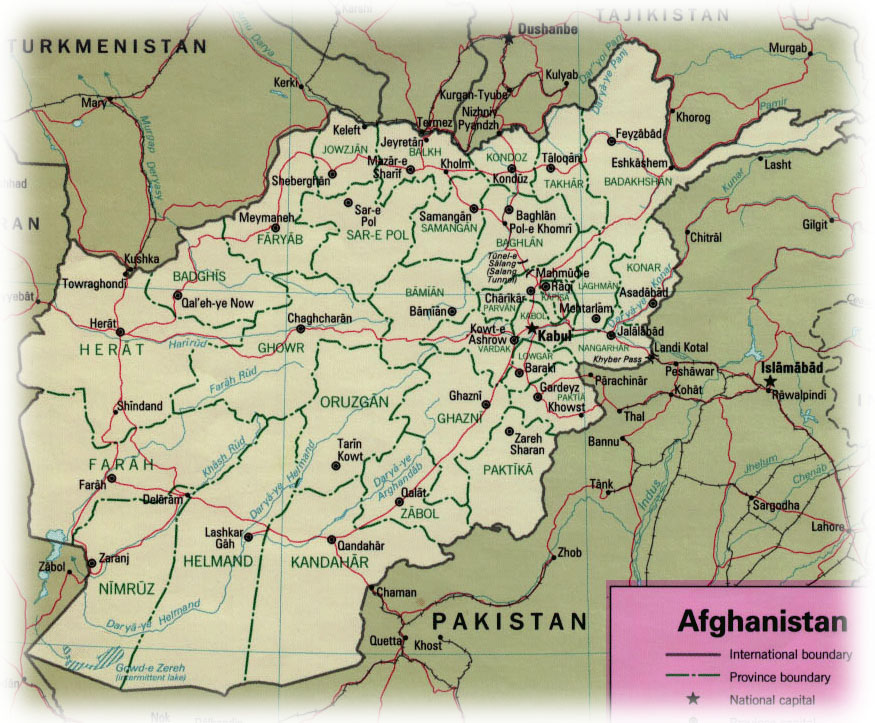
(click to enlarge maps)
Former Soviet Republics Bordering Afghanistan


Waziristan


Swat Valley


Meanwhile, Back In Babylon, Things Fall Apart; And In Pakistan, A Fundamental Deal

The first Marines went over the wall, parlez-vous. Hm. Where have we heard that before? Oh, yeah, in the "War To End All Wars," almost a hundred years ago. Think how many died believing their sacrifice might end war forever. Makes you wonder if we're not always delusional, going into a war.

You'd think, after seven years in Iraq, the scales would have fallen from our eyes. Anyone who believes that we can ever leave there without sizable portions of whatever is left of it falling into chaos, civil war and terrorism is plainly delusional. And now we're going to do the same thing in Afghanistan. Why? Because the very same generals who managed the mess in Mesopotamia are insisting upon it. And if they don't get their way, again, they're going to try to overthrow Obama in the corporate media. So, what choice does Obama have but to do their bidding? Grow a pair?

(continued)
.


.

He's pretty much doing what the new Pakistani PM is doing: Giving in to the other side. Yousuf Raza Gilani just did a deal with the Pakistan version of the Taliban to give them official control of their breakaway region on the border of Afghanistan, Shariah Law and all. (Not exactly Ladies Night in Pakistan tonight.) This region is next door to the home base of Al Qaida and much of the Afghan Taliban. So, here we are reliving the Cold War, where the worst people on both "sides" of an imaginary conflict pretty much ran the show. That put us all under "nuclear umbrellas" for almost fifty years, until the financial weight of it brought down both sides. Hmmmm.

Of course, both sides are already down, financially, in this new "drole de guerre." So, what, exactly, is going to bring about glasnost and perestroika this time? You could try asking Vladimir Putin, the ex(?)-KGB agent & FSB chief in Soviet Russia. He recently outmaneuvered the U.S. in Kyrgyzstan, bribed them to kick us out, then offered to let us use Russian territory as our sole northern access to the territory of his old buddies, the Afghans. They're probably thrilled. But why would the Rooskies want to help us build a natural gas pipeline to compete with their European lines? Are they trying to sabotage the pipe, or are we going to end up finishing the Russians' drive for a warm-water port in the Indian Ocean or the Arabian Sea for them? Cuz, you know, I think our troops deserve to know which country they're going to die for. I'm just sayin'.


EMAIL THE PRESIDENT


EMAIL THE SENATE MAJORITY LEADER


EMAIL THE SPEAKER OF THE HOUSE


EMAIL THE DEMOCRATIC PARTY CHAIRMAN


MCCLATCHY NEWSPAPERS
"Dozens of Shiite pilgrims die in resurgent violence in Iraq"
"The Surge is working! The Surge is working! The Surge is BOOOM!!!

' More than three dozen Shiite Muslim pilgrims were killed Friday when a suicide bomber blew herself up at a crowded roadside tent in central Iraq , marking the first time in more than a month that a suicide bomber carried out such a deadly attack. The blast — the third straight day of intense violence — threatens to set back the security gains Iraq has made in recent months as Washington prepares to draw down U.S. troop levels. In the past three days, car bombings, political assassinations and suicide attacks — including Friday's — have claimed the lives of at least 72 people. The climb in violence comes after a stretch of relative calm following five years of sectarian warfare. Much to the relief of many Iraqis, the Jan. 31 election passed without major violence. However, the vote's pending outcome — results should be released next week — could be exacerbating tensions among rival sects and politicians. Despite a heightened security presence in Karbala and beyond, attacks on Shiite Muslim pilgrims have persisted. The attacks targeting Shiite Muslim pilgrims coincide with a spate of attacks directed at Sunni politicians and others in the north. In Mosul , a volatile city to the north where Iraqi security forces have yet to secure control, sectarian tensions between Sunni Arabs and Sunni Kurds have intensified. In the past few days, Mosul has seen a mounting death toll. Among the dead: Four policemen, one Sunni politician, one civilian, and an Iraqi soldier. And on Monday, four American soldiers and their interpreter were killed at a checkpoint when a vehicle with a makeshift explosive blew up nearby. '

AUSTRALIA.TO
"Troop Increase in Afghanistan Differs from Iraq Surge "
Permanent "surge"?
' When discussing an increased troop commitment in Afghanistan, the chairman of the Joint Chiefs of Staff cautions that it won't be a carbon copy of the troop surge that proved so successful in Iraq. "I actually don't use the term 'surge,' and I don't think it's right, because the 'surge' term has an implication that it is going to go up, then come down," Navy Adm. Mike Mullen told reporters returning with him today after a two-day trip to Fort Drum, N.Y., and Ottawa. That's what happened during the troop surge in Iraq, when 33,000 additional troops began deploying in early 2007 to boost security in Baghdad and Anbar province. Violence quickly decreased, and the last of the five original surge brigades redeployed in July 2008 after a 13-month deployment. But Mullen has made no secret of the fact that he considers Afghanistan a tougher mission than the one in Iraq, and the challenges more daunting. As a result, he said there's no set timetable anticipated for the additional 20,000 to 30,000 troops Army Gen. David D. McKiernan, commander of NATO and U.S. forces in Afghanistan, has requested to improve security there, Mullen said. "I don't know how long it is the troops will be there," Mullen said. "I think we will keep troops there long enough to provide the security and sustain it at a time when we will continue to build the Afghan security forces." '

YAHOO NEWS
"First wave of U.S. troops in Afghan surge engages in combat"
Giving in to the bad guys I.
' LOGAR PROVINCE, Afghanistan – Close to 3,000 American soldiers who recently arrived in Afghanistan to secure two violent provinces near Kabul have begun operations in the field and already are seeing combat, the unit's spokesman said Monday. The new troops are the first wave of an expected surge of reinforcements this year. The process began to take shape under President George Bush but has been given impetus by President Barack Obama's call for an increased focus on Afghanistan. U.S. commanders have been contemplating sending up to 30,000 more soldiers to bolster the 33,000 already here, but the new administration is expected to initially approve only a portion of that amount. White House press secretary Robert Gibbs said Monday the president would decide soon. Militant activity has spiked in Logar and Wardak over the last year as the resurgent Taliban has spread north toward Kabul from its traditional southern power base. Residents say insurgents roam wide swaths of Wardak, a mountainous province whose capital is about 35 miles from Kabul. Haight said he believes the increase of militant activity in the two provinces is not ideologically based but stems from poor Afghans being enticed into fighting by their need for money. Quoting the governor of Logar, the colonel called it an "economic war." Logar Gov. Atiqullah Ludin said at a news conference alongside Haight that U.S. troops will need to improve both security and the economic situation. "There is a gap between the people and the government," Ludin said. "Assistance in Logar is very weak, and the life of the common man has not improved." Ludin also urged that U.S. forces be careful and not act on bad intelligence to launch night raids on Afghans who turn out to be innocent. It is a common complaint from Afghan leaders. President Hamid Karzai has long pleaded with U.S. forces not to kill innocent Afghans during military operations and says he hopes to see night raids curtailed. Pointing to the value of such operations, the U.S. military said Monday that a raid in northwest Badghis province killed a feared militant leader named Ghulam Dastagir and eight other fighters. Other raids, though, have killed innocent Afghans who were only defending their village against a nighttime incursion by forces they didn't know, officials say. Haight cautioned last week that civilian casualties could increase with the presence of his 2,700 soldiers. "We understand the probability of increased civilian casualties is there because of increased U.S. forces," said the colonel, who has also commanded Special Operations task forces in Afghanistan and Iraq. '

TIME MAGAZINE
"Will Pakistan's Shari'a Pact Calm or Inflame the Tribal Regions?"
Giving in to the bad guys II.
' In a desperate move to deal with an intractable radical insurgency, the Pakistan government says it will impose a form of Islamic law in the area of Swat Valley in the northwestern corner of the country. As a result, Islamabad's faltering military campaign there has been put on hold, and the militants have agreed to a tentative ceasefire. But many observers fear that, far from calming the conflict, the government has capitulated to the Islamist guerrillas and has set a worrying precedent — one that will surely displease some U.S. officials who want the government to take a harder line against militants. It is, however, a highly controversial and risky course. A previous peace deal failed within months, after giving the militants the space to regroup and sweep away earlier military gains. "It is an attempt on the part of the government to win over a section of religious extremists," says Hasan Askari-Rizvi, a military analyst. "The idea is that if they are pulled out of the struggle, they will cooperate with the government and help isolate the militants. It may have been a good idea if the Taliban were on the run, but they're well entrenched." It is unclear what Sufi Mohammed's precise role will be, or how much leverage he has in Swat. The militant leader emerged as a force in the mid-1990s, when his loyalists, sporting black turbans, seized control of buildings and courthouses before the government of then Prime Minister Benazir Bhutto was able to tame the revolt and sign a truce. In late 2001, Sufi Mohammed led thousands of young men — including Fazlullah — to Afghanistan to fight western forces who had invaded in the wake of the 9/11 attacks on the United States. Upon their return, he was arrested and imprisoned. His release last year was contingent on his disavowal of militancy and an agreement to cooperate with the government. '

MCCLATCHY NEWSPAPERS
"Is the U.S. repeating Soviet mistakes in Afghanistan?"
Those who do not remember the past...
' Some Afghan experts are worried that the United States and its NATO allies are making some of the same mistakes that helped the Taliban's forerunners defeat the Soviet Union after a decade-long occupation that bled the Kremlin treasury, demoralized Moscow's military and contributed to the Soviet Union's collapse. Among the mistakes, these experts said, are relying too heavily on military force, inflicting too many civilian casualties, concentrating too much power in Kabul and tolerating pervasive government corruption. Violence and ethnic tensions will worsen, they warned, absent a rapid correction in U.S.-led strategy that improves coordination between military operations and stepped up reconstruction, job-training and local good governance programs. "We have not justified democracy. We have not justified human rights. We have not justified liberalism," said Azziz Royesh, a political activist, educator and former anti- Soviet guerrilla. "Afghans don't like the Taliban . But we haven't shown them a better option." "I see a time when again there could be thousands of unorganized insurgencies around the country," he cautioned. "The foreigners are the ones who will be targeted. If we don't bring change here, these kinds of incidents will add to the Taliban insurgency." Previously secret Soviet documents made public in English for the first time on Saturday reveal that Obama is facing some of the same problems that compelled former Soviet leader Mikhail Gorbachev to order a withdrawal from Afghanistan. The documents, posted on the George Washington University's National Security Archive Web site, show that Gorbachev decided in 1985 to end the Soviet occupation after realizing that Moscow couldn't win a military victory, a point that Obama and senior U.S. commanders repeatedly stress. '

THE CHRISTIAN SCIENCE MONITOR
"Moscow again eyes Afghanistan 20 years after retreat"
They're B-A-A-A-A-A-C-K ! ! !
' "The consensus of Russian experts is that there is no winning strategy for the US and NATO in Afghanistan," says Fyodor Lukyanov, editor of Russia in Global Affairs, a top Moscow-based foreign policy journal. "Most believe that, sooner or later, Afghanistan's neighboring countries will face serious challenges from a possible revived Taliban. It means we need to work with the Americans, and find common approaches, but we need to make our own preparations, too." Last week, after receiving a $2.3 billion package of loans and aid from Moscow, Kyrgyz president Kurmanbek Bakiyev ordered the US to vacate Manas, the last of the military bases on former Soviet territory that Russia had acquiesced to following the Sept. 11, 2001, attacks. Also last week, Russia pushed its regional alliance, the six-member Collective Security Treaty Organization, to beef up its joint rapid reaction force to 10,000 men aimed at combating terrorism and drug trafficking. And next month, the Shanghai Cooperation Organization, a regional alliance led by Russia and China, will convene a special conference on Afghanistan to explore ways to strengthen the group's relations with Kabul, which could include Russian arms sales and military advice for the first time since the Soviet withdrawal, experts say. Cooperating with the US may, in the future, take a back seat to Moscow's own regional offensive, some say. "Russia urgently needs to create friendly regimes in central Asia and a strong, unified border defense," says Alexei Mukhin, director of the independent Center for Political Information in Moscow. "We're very willing to work together with NATO against our common enemy, the Taliban, but we've seen from past experience that this does not produce positive or lasting results for us. The Kremlin is certain that Russia needs to act decisively on its own" to ensure Russia's security if Afghanistan collapses again, he says. '
.
.


There's more: "THE SURGE, PART DEUX" >>

Sunday, February 8, 2009


POLLING THE VICTIMS OF GAZ WARFARE

.
AFGHANS DON'T LIKE BEING BOMBED
(JUST FOR A GAS PIPELINE?)


THEY'RE STARTING TO LIKE IT WHEN WE GET BOMBED

How Long Before A "Surge" Drives Them All Back Into The Arms Of The Taliban?

A surge is what Dubya's advisers, er, I mean Obama's advisers, er, oh, well, they're the same people, pretty much, and they're recommending the same thing they recommended in Iraq. Iraq, now there's a model to emulate. Recent elections showed a trend toward just what we were warned about, before we went in there: Fragmentation of Iraq into three rump States: One controlled by Iran, one in a perpetual destabilizing war with Turkey, and, caught in the middle, one mightily pissed off and oil-free home base for Sunni terrorism, like Al Qaida. That's pretty much how the election results played out this week.

Afghanistan could be split in nine ethnic pieces: Aimaq, Baluch, Hazara, Kirghiz, Nuristani, Pashtun, Tajik, Turkmen and Uzbek. There's no oil there, so you think there'd be less to squabble about. But there may be a pipeline from the Caucasus running through Afhganistan to the Arabian Sea or the Indian Ocean off Pakistan someday. That's why we're there, according to some people. The pipeline can't be built until it's safe enough to carry out a massive construction project, though. So we're going to be there for quite a while. We might even end up catching Osama, if he doesn't die of old age first. But that's kind of a side effect.

(continued)
.

.

Things have not been going all that well in Afghanistan. You've gotta wonder how they managed to conduct an opinion survey in a place like Afghanistan in the middle of a war. Did they round up the usual suspects and have them fill out questionnaires? Go from bread line to bomb shelter to refugee camp asking questions in five different languages while under heavy guard? Did they ask women, or only men? Wait till they hear that we may be working with the Russians now. Poll that. Ah, Afghanistan!


INTERNATIONAL HERALD TRIBUNE
"Election results spur threats and infighting in Iraq"
So, the surge is working, hunh? Define "working."

' RAMADI, Iraq: The post-election curfew has been lifted and the threats of violence have been muted after the intervention of envoys from the Iraqi Army, the central government and the U.S. Marines. A cacophonous bustle has returned to the filthy, shattered streets of this provincial capital, once a base of the Sunni insurgency. And still Faris Taha, one of the election's victors, according to preliminary results, is too fearful to return to the region he will soon represent. "I cannot go back," he said, having retreated from his hometown east of Ramadi, the capital of Anbar Province, to a hotel in Baghdad's Green Zone. "I am afraid." '

MOTHER JONES
"Partition in Iraq: A Serious Problem With Biden as VP?"
A "secret plan for peace" in a divided Iraq?
' When Biden, who initially supported the war, was running for president, he repeatedly insisted he was the only candidate with a workable plan for ending it. His campaign created a video, featured in the YouTube debate, that said, "Joe Biden is the only one with the experience and the plan to end this war responsibly so our children don't have to go back." That plan was widely seen as calling for the partition of Iraq. It read, in part, "The United States should actively support a political settlement in Iraq based on the final provisions of the Constitution that create a federal system of government and allow for the creation of federal regions, consistent with the wishes of the Iraqi people and their leaders." Despite Biden's occasional objections, that wording was read by other politicians and the media as calling for the division of Iraq into three regions, one for Sunnis, one for Shiites, and one for Kurds. For that perception, Biden has himself to blame. An op-ed Biden wrote in 2006 described his plan this way: "The idea, as in Bosnia, is to maintain a united Iraq by decentralizing it, giving each ethno-religious group -- Kurd, Sunni Arab and Shiite Arab -- room to run its own affairs, while leaving the central government in charge of common interests.... The first [point of the plan] is to establish three largely autonomous regions with a viable central government in Baghdad. The Kurdish, Sunni and Shiite regions would each be responsible for their own domestic laws, administration and internal security. The central government would control border defense, foreign affairs and oil revenues." The Biden Plan, as it was called, proved remarkably popular in the Senate — in September 2007 it faced a Senate vote and passed with the support of 75 senators, including 26 Republicans. The non-binding measure did not compel the President to act, only expressed the will of the Senate. Hillary Clinton and Chris Dodd voted with Biden; Obama and McCain did not vote at all. '

INTERNATIONAL HERALD TRIBUNE
"Survey: US, allies losing ground in Afghanistan"
Change they can believe in? Not so much.
' A survey among Afghans indicates support is plummeting for the Kabul government and the United States and European troops trying to bolster it against insurgents, according to a report Monday. The decline is striking particularly in the last year, the poll shows, even as the Obama administration and NATO allies weigh moves to strengthen forces in the struggle with Taliban and other radical groups. President Barack Obama has assigned high priority to the conflict, and the administration is weighing whether to send another 30,000 U.S. troops, almost doubling the 32,000 present. Few Afghans felt encouraged by Obama's election, however: Two in 10 said they thought he would make things better for the Afghan people, and nearly as many said they thought he would make things worse. The rest either expected no change or were waiting to see. The poll — commissioned by ABC News, the BBC and ARD German TV — found that the number of Afghans who say their country is headed in the right direction has dropped to 40 percent, from 77 percent in 1995 when the survey was first conducted. '

TREND NEWS AGENCY
"Angry civilians protest civilian deaths in Afghanistan"
Maybe this has something to do with those poll numbers.
' Angry civilians in Laghman are protesting military operations that resulted in civilian deaths. The protestors are demonstrating against the deaths of 21 civilans killed in a U.S. air strike on Jan. 23. The U.S. military refused responsibility for the bombing and claimed that it did not target civilians. However, 15 insurgents may have been killed during the attack. Many Afghan civilians and the government condemn what they consider the indiscriminate use of arms by the allied forces. '

AFP
"Afghan official beheaded by 'guests' "
Another way of taking a head count.
' The Taliban, who control several districts of Helmand, have previously beheaded other people, including hostages, in a campaign of intimidation and fear that targets Afghans working for the government or international groups. Ethnic and tribal rivalries and crime, including that associated with Helmand's booming opium trade, also play a part in the wave of violence that has engulfed the country. '

THE STATE
"US supply routes in Afghanistan squeezed 2 ways"
Bit of a cock-up in the Khyber, I'm afraid...
' U.S. troops in Afghanistan saw their supply lines squeezed from the north and east Tuesday after militants blew up a bridge in Pakistan and Kyrgyzstan's government said it would end American use of a key air base following Russia's announcement of new aid. Securing efficient and safe supply routes into Afghanistan has become a top priority for U.S. officials as the Pentagon prepares to send in up to 30,000 more American soldiers this year. Some 75 percent of U.S. supplies travel through Pakistan, where militants have stepped up attacks on truck convoys destined for U.S. bases. Attackers on Tuesday blew up a bridge in northwestern Pakistan in a fresh salvo in an escalating campaign seeking to cripple Washington's war effort in Afghanistan. Islamist militants blew up a bridge in northwestern Pakistan on Tuesday, cutting a major supply line for Western troops in Afghanistan in the latest in a series of attacks on the Khyber Pass by insurgents seeking to hamper the U.S.-led mission against the Taliban. A NATO spokesman in Afghanistan confirmed that supplies along the route had been halted "for the time being," but stressed the alliance was in no danger of running out of food, equipment or fuel. The U.S. and NATO fly ammunition, weapons and other sensitive supplies into Afghanistan, but it would be too costly to ship everything that way. '

CNN
"Kyrgyzstan cites slaying, finances in closing of U.S. base"
Gee, wonder how this happened?
' U.S. Secretary of State Hillary Clinton has called the decision to close Manas Air Base "regrettable." Just a few weeks ago, during a visit to the region, Gen. David Petraeus -- who oversees U.S. operations in the Middle East and Central Asia -- talked about how important the base is. Closing Manas base would not affect only the United States. Petraeus said the site "plays an important role" in the deployment of Spanish and French soldiers into Afghanistan, in addition to U.S. troops. Sultangaziev rejected any suggestions that Russia may have pushed for the closure of the U.S. base. He said the announcement of Russia's aid package was a coincidence. The mountainous former Soviet republic is Central Asia's second poorest country. The U.S. base has been in operation since December 2001 under a U.N. mandate. Kyrgyzstan also is home to a Russian military base, at Kant, that officially opened in 2003. The Russian newspaper Kommersant reported Tuesday that Russia would offer Kyrgyzstan a $300 million, 40-year loan at an annual interest rate of 0.75 percent and write off $180 million of Kyrgyzstan's debt. Clinton said Thursday, "It's regrettable that this is under consideration by the government of Kyrgyzstan, and we hope to have further discussions with them. But we will proceed in a very effective manner no matter what the outcome of the Kyrgyzstan government's deliberations might be." '

YAHOO NEWS
"Russia denies influencing Kyrgyzstan on US base"
So, the Russians had nothing to do with it... ?
' A senior Russian envoy says Moscow did not influence Kyrgyzstan's decision to end American access to a base used to resupply U.S. troops in Afghanistan. The decision was announced several days ago as Kyrgyzstan's president was visiting Moscow after securing more than $2 billion in loans and aid from Russia. Deputy Prime Minister Sergei Ivanov says "there is no correlation" between the Russian aid offer and the Kyrgyz decision. '

REUTERS
"U.S. diplomat holds Afghan supply talks in Moscow"
Suddenly, Russia to the rescue. Well played, Vladi!
' A senior U.S. diplomat will hold talks with Russian officials on Tuesday about opening up new supply routes across Russian territory to NATO forces in Afghanistan, the U.S. embassy said. The talks come less than a week after Kyrgyzstan announced it will close a U.S. airbase on its territory that provides logistical support by air to U.S. troops fighting the Taliban in nearby Afghanistan. Russia has signalled readiness to expand cooperation in supplying non-military equipment to U.S. forces and other NATO contingents in Afghanistan. Such shipments would also have to pass through Kazakhstan and Uzbekistan to reach the conflict zone. Supply routes through Pakistan have become increasingly vulnerable to militant attacks over the last year. '

THE WALL STREET JOURNAL
"Beware of energy’s robber barons"
Russia, India, the U.S. This is getting complicated.
' In early January, Russia’s giant energy company Gazprom suddenly cut off natural gas supplies to Ukraine. As a result, much of Europe shivered without heat because pipelines through Ukraine supply most of their gas. Moscow exercised its gas clout in 2008 as well, ostensibly over pricing and transit fees, but more likely as an assertion of its readiness to wield energy as a weapon. The Russian act has implications for two gas pipelines that concern India: TAPI (Turkmenistan-Afghanistan-Pakistan-India) and IPI (Iran-Pakistan-India).
At issue is the stranglehold both monopoly suppliers and transiting countries may have over energy security. Given that TAPI and IPI would transit through rough terrain with restive populations such as Afghanistan and Baluchistan, the chances of disruption are high, whether via blackmail by the Pakistani government or due to physical damage by insurgents. '


AFGHANA.COM
"Provinces of Afghanistan"
On the road to Kabul.
' Interactive Map: Badakhsan - Badghis - Baghlan - Balkh - Bamian - Farah - Faryab - Ghazni - Ghowr - Herat - Helmand - Jowzjan - Kabul - Kapisa - Konar - Kondoz - Laghman - Logar - Nangarhar - Nemroz - Oruzgan - Paktia - Paktika - Parwan - Qandahar - Samangan - Sar-e-pul - Takhar - Wardak - Zabol '


PBS
"Interactive Map: Afghanistan's Ethnic Groups"
The many tribes of Afghanistan.
' Map: Afghanistan's Ethnic Groups - In-depth Coverage of Afghanistan and the War on Terror by the Online NewsHour. '


(Cross-posted at blog me no blogs.)
.
.


There's more: "POLLING THE VICTIMS OF GAZ WARFARE" >>

Thursday, January 15, 2009


DEAR POET

Elizabeth Alexander is a poet, essayist, playwright, and teacher. She is the author of four books of poems, The Venus Hottentot, Body of Life, Antebellum Dream Book, and American Sublime, which was one of three finalists for the 2005 Pulitzer Prize. She is also a scholar of African-American literature and culture and recently published a collection of essays, The Black Interior. She has read her work across the U.S. and in Europe, the Caribbean, and South America, and her poetry, short stories, and critical prose have been published in dozens of periodicals and anthologies. She has received many grants and honors, most recently the Alphonse Fletcher, Sr. Fellowship for work that “contributes to improving race relations in American society and furthers the broad social goals of the U.S. Supreme Court’s Brown v. Board of Education decision of 1954,” and the 2007 Jackson Prize for Poetry, awarded by Poets and Writers. She is a professor at Yale University, and for the academic year 2007-2008 she is a fellow at the Radcliffe Institute for Advanced Study at Harvard University.
...when I think of the soldiers packing gear,
Their guns silent, tanks still, standing at the ready,
Eyes moist with liberation and grief, hands wrung their last,
I think of them gleaming, striding away from the savagery,
The dying, the defeated, the triumphant... colorless stench.

When I see them marching out, freed of the difficult sand,
I imagine that black soldiers are most anxious for home,
Calling for the stretch of time to witness their history,
Onlooker to human hope instead of war’s gangling limbs
Stacked like firewood on streets smothered in suffering.

When I think of all of the soldiers coming home
Shipped in those god-awful frowning boxes,
I try to imagine their loved and beautiful faces,
But their smiles float away from who they were.
What a sad and ghastly testament of their use.

Dear Poet,
May your use, your words paint upon this,
Grant us reprieve from an unfavorable history.
Free our hearts and our minds of horrid combat
For war is the chain that has enslaved us all.
© 2008 mrp/tpm


There's more: "DEAR POET" >>

Tuesday, December 16, 2008


Between the century...

...and the shoe
came the war, the torture,
the injustice and the blood,
the rage and the sorrow
and the tapping and the flood.

Between the eleventh and the crash
came the shock, the awe,
the anguished and the dreaded,
the widowed and the scourge,
the bombed and beheaded.

Between the reign and the snow
came the child’s vacant stare,
the grief and the wrath,
the tears and the scowl,
the starving and the flag.

Between the heaven and the hell
came the lies and the spin,
the tanks and the guns,
the free and imprisoned,
mankind and his sun.

There were no angels….

© 2008 mrp/tpm
Craig Welch takes viewers inside a surreal, meticulously crafted world to meet a mysterious protagonist and his otherworldly visitor.

In this surreal exposition, we meet a man, obsessed with control. His intricate gadgets manipulate yet insulate, as his science dissects and reduces. How exactly are wings attached to the back of angels? In this invented world drained of emotion, where everything goes through the motions, he is brushed by indefinite longings. Whether he can transcend his obsessions and fears is the heart of the matter. A film without words.

Directed by : Craig Welch. Produced in 1996...


-How Wings are Attached to the Backs of Angels-


There's more: "Between the century..." >>

Saturday, December 13, 2008


Security Station Soldiers Don't Count

Today we hear:

Thousands of U.S. troops will remain in Iraqi cities at local security stations after the summer deadline to have combat troops out of the urban areas, the top U.S. commander in Iraq said Saturday.
The report continues,
Gen. Raymond Odierno told reporters that the troops would serve as training and mentoring teams, and thus would not be included in the mandate to pull combat troops from the cities. That mandate is included in the recently approved U.S.-Iraq security agreement.
My first thought was "in your face Iraqi scum," as in the USA! USA! shouters saying, "the US doesn't really have to adhere to its agreements... because we're the superior USA!"

My second thought was, these little security stations will be sitting ducks. It's only a matter of time before one is over run and every American in it is liquidated. Then we'll have a big step backwards; we're all familiar with such events. (Hopefully I'm wrong).

My final thought drifted back to the prediction I made back, coincidentally as I check the date, two years ago today in a piece entitled Iraqization and Predicted Length of Iraq War.


There's more: "Security Station Soldiers Don't Count" >>

Tuesday, November 25, 2008


"Coming Home" 2008: Iraq and Afghan Vets Return

WHAT SORT OF PEOPLE ARE THEY, NOW?

HOW HAS THE WAR AFFECTED OUR PEOPLE?

YouTube: IAVA "Community of Veterans"


More Importantly, How Are Our Vets Being Treated?

TV has recognized our vets. Well, a soap opera hired one, anyway. Obama may hire one, too: Hawaii's own Major Tammy Duckworth, the Army's female helicopter pilot who lost both legs fighting for her country, might be our next Secretary of Veterans' Affairs. As for the rest of those coming home, it's not a happy time.

Unemployment in parts of the States has hit double digits. State, County, City and private colleges are cutting back their financial aid and their enrollments. The credit crunch is hitting kids who grew up on plastic especially hard: Can't even afford a Slurpee at the 7-11 now that the VISA-card is canceled. And that dream home the military bonus was supposed to buy? It's a bit beyond the means of most enlisted personnel and lower-ranking officers, even if they could get a mortgage these days. Just getting a loan for a new car might be a problem for many. And let's not talk about the price of gas, "down" to $2.50/gal! Welcome home, soldier!

[continued]

The nation's financial crunch is taking its' toll. Already majorly stressed-out after repeated deployments to urban, mountain & desert guerrilla wars in hostile nations whose very culture rejects us, our troops are suffering psychological problems in record numbers. Whole combat units have suffered suicides, family killings, and other acts of violence on the home-front. The Department of Defense and Veterans' Affairs have been slow to address the problems, starting out with the usual bureaucratic defense of denial. Hell, they only just recognized the effects of Gulf War Syndrome, after seventeen years. But that's faster than they recognized Agent Orange problems, I guess.

VA Hospitals are not what they once were, or what they were meant to be, after WWII. They means-test and narrowly define "service-connected" medical problems, discouraging vets from seeking treatment. The whole system has been hanging by a thread for decades, eyed for possible conversion to Medicare or Medicaid facilities, or privatization. Some entire States only have one VA Hospital. And there is little or no outreach to the new generation of veterans.

The problem is compounded, ironically, by the advances in battlefield medicine: Wounded soldiers who might never have made it to an aid station are now whisked off to state-of-the-art hospitals in time to save their lives. But many of them are so grievously wounded or mutilated that they will require major rehab and/ or medical attention for the rest of their lives. The system is just not set up for that. Even wounded vets with much less serious problems are finding that the DOD and VA are not able, or not willing to help them out, Stateside. We've all seen the pictures of those run-down military hospitals and barracks for the casualties of war who made it home. Did we care?

Public sentiment is another problem. Sure, every SUV had a "9/11" sign, a yellow ribbon that said "Support Our Troops," and a "BUSH-CHENEY" bumper-sticker. But what is the attitude toward the men and women going off to war, and then bringing it all back home with them? We haven't heard those apocryphal stories of "hippies" spitting on returning soldiers at the airport this time. But we haven't seen a lot of ticker-tape parades on national TV, either, except for sports teams.

Given the fact that this was an all-volunteer effort, drawing largely upon our National Guard and Reserves, with their older personnel, constantly rotated in and out of two war zones, the effect of the war on the larger population has been minimized. At the same time, while none of the rest of us was at risk, we all knew somebody who was at risk. The shipping clerk or his wife. The corner druggist or her husband. The mailman, fireman, policeman or woman we used to see almost every day. The boy next door. The girl you sat next to in school. Women. Lots of women in this one, in combat for the first time, despite the regulations against it. Well, they're back, mostly intact. They look the same, sort of. A little older. A little haggard, maybe. Probably lost a few pounds. Kinda tired around the eyes. Sometimes they just stare off into space. We all do that, sometimes, right? But we did not choose to go to war. And they did.

So what's the difference? Are they angry at us? Are they hurt that we didn't join them, and haven't much recognized them for what they did? Do they find it hard to understand that we don't understand what they did, or what they think they did? To many of them, their actions "in-theater" mattered, to themselves and their comrades, and to many locals over there. They could see the chaos, which we created, coming under control, thanks to their own efforts. They saw the remains of the old Saddam and Taliban regimes, and they knew that there had been major improvements.

After many months inside the military propaganda machine, they might have come to accept the official line on the war's effectiveness and on the Iraqi and Afghan people's gratitude, and on how we succeeded in bringing democracy to the Middle East. All that stuff which the rest of us don't even consider real, for the most part; don't even think about, ever: All of us among whom the returning warriors-triumphant now have to live as shipping clerks and insurance salesmen. How's that working out for them, I wonder?

CBS NEWS
"Vets' Suicide Rate "Stunning""
' Some of America's 25 million veterans face their biggest fight when they return home from the battlefield -- when they take on mental illness. And, a CBS News analysis reveals they lose that battle, and take their own lives, at a clip described by various experts as "stunning" and "alarming," according to Chief Investigative Correspondent Armen Keteyian. One called it a "hidden epidemic." He says no one had ever counted just how many suicides there are nationwide among those who had served in the military -- until now. The five-month CBS News probe, based upon a detailed analysis of data obtained from death records from 2004 and 2005, found that veterans were more than twice as likely to commit suicide in 2005 as non-vets. A recent Veteran Affairs Department estimate says some 5,000 ex-servicemen and women will commit suicide this year, largely as a result of mental health issues, and Keteyian says, "Our numbers are much higher than that, overall." '
THINK PROGRESS.ORG
"VA Conceals Vet Suicide Figures From CBS To Downplay ‘Epidemic In Suicide’»"
' Yesterday marked the opening day of a class action lawsuit brought by Iraq and Afghanistan veterans against the Department of Veterans Affairs (VA), arguing “that failure to provide care is manifesting itself in an epidemic of suicides” among veterans. The VA denies the charges, pointing to increased resources devoted to mental health. Today, CBS News reports that the VA apparently concealed veteran suicide statistics, and fed the news organization faulty data for a story on the issue. The VA told CBS that there were 790 attempted suicides in all of 2007. Yet shortly after, the VA’s head of Mental Health, Dr. Ira Katz, wrote in an e-mail to the VA’s top media adviser that there were “about 1,000 suicide attempts per month among veterans we see in our medical facilities.” Suicide among veterans — even those who seek help from the VA — continues to be a huge problem. Just last week, the VA Medical Center in Dallas, TX, officially closed its psychiatric ward after a fourth veteran this year took his own life. Often veterans cannot get help right away: According to the Iraq and Afghanistan Veterans of America, “The average wait-time for a disability claim” — including mental health problems — “is 183 days, or about six months.” '
NEWSWEEK
"New Ad Tells Vets They're Not Alone, Offers Social Networking "

' Sometimes one needs to restate the obvious to point out what's right in front of us. Herbert was discussing the launch of a major new ad campaign by the advocacy group, Iraq and Afghanistan Veterans of America, that aims to send a message to returning vets: you are not alone. The ad touts an online social networking Website called communityofveterans.org which not only provides useful information (such as how to navigate the VA), but also gives vets a chance to correspond with each other. Because the site was designed by veterans, attention is paid to aspects of veteran life the general public may not be aware of, such as an excellent portion that deals with homecoming. Put simply, the site got it absolutely right: It’s good to be home. Or is it? '
NY TIMES
"Help Is on the Way"
' Returning to civilian life from combat is almost always a hard road to run. Studies have shown that a third or more of G.I.’s returning from the combat zones of Iraq and Afghanistan — more than 300,000 men and women — have endured mental health difficulties. Many have experienced the agony of deep depression, and alarming numbers have tried or succeeded in committing suicide. A CBS News study found that veterans aged 20 to 24 were two to four times as likely to commit suicide as non-veterans the same age. The advertising campaign, initiated by the advocacy group Iraq and Afghanistan Veterans of America, was designed to increase the number of veterans seeking treatment for their mental health difficulties. Many are embarrassed to speak about their problems or are unaware that help is available, or even that they need help. As Bryan Adams told me, “I didn’t know anything about these symptoms. I didn’t know what post-traumatic stress disorder was.” '
IAVA
"Iraq and Afghanistan Veterans of America"
' Iraq and Afghanistan Veterans of America is the nation's first and largest group dedicated to the Troops and Veterans of the wars in Iraq and Afghanistan, and the civilian supporters of those Troops and Veterans. IAVA is an independent organization and is not affiliated with any groups other than our sister (c)4, IAVA Action Fund. '
IAVA: COMMUNITY OF VETERANS.ORG
"Iraq & Afghanistan Veterans Social Networking Site"
' Join our veterans-only online community to connect with people who know where you're coming from. Share your experiences and help others make the transition to civilian life. Stronger Together. '
[Cross-posted at blog me no blogs by cosanostradamus.]


There's more: ""Coming Home" 2008: Iraq and Afghan Vets Return" >>

Monday, June 23, 2008


"LEAVE IRAQI'S ALONE" -REPUBLICANS

.
LET THEM SWALLOW THE OIL DEAL WE'VE SHOVED DOWN THEIR THROATS

THE WAR WASN'T ABOUT OIL, YOUR CHECK IS IN THE MAIL, OH, AND ABOUT YOUR MOUTH...

"Commentator" Says Democrats Infringing On Iraqi Sovereignty By Objecting To Bushco's No-Bid Oil Deals

These Republicans would have made the Fuhrer so proud! They have cleverly infiltrated the press with agents pretending to be objective, so that they are able to immediately attack any truth before it gets too far. It's Wunderbar! Herr Goebbels spirit lives! Anything can be turned around, if you only lie big enough, lie loud enough, and lie often enough. Achtung, Baby!

Democrats are responsible for the escalation in oil prices, because they wouldn't allow Republicans to drill everywhere. Never mind that dozens and dozens of US government oil-leases are going unused by the oil companies. Never mind that there is no actual shortage of supply. Never mind that demand is going down. Never mind that this is an engineered "crisis." Lie about it, meine kinder!

Democrats are responsible for speculation in the oil markets, never mind why, but now they are trying to interfere with these free markets. This is socialism, and not the National kind. If prices are frozen at these historically high and incredibly profitable levels, the free market will simply impose an instantaneous worldwide freeze on supplies, as if by magic, not collusion. So, don't f*ck with us, or the invisible hand of the market will choke your loved ones to death, you leftist degenerates!

Democrats do not understand these things. They do not understand the delicate balance in Iraq: Negotiating, or pretending to negotiate a deal that was set in stone years ago, with whatever puppet government happens to be there today, requires great theatrical skill. Democrats do not have this kind of acting ability. That is why der Schwarzenegger is a Republican, and in favor of oiling, I mean drilling on the coast of Coll-ee-fah-nee-yah, no matter what the Jews and homosexuals and Democrats think.

As to those Iraqi's, of course they signed a sweetheart deal! We have them surrounded. If they say no, we just march them outside, and let them be shot. Meine herren, if only we could do that here! It would only require a small expansion of the Second Amendment. Houston Uber Alles!
.
REUTERS
"Senators seek to stop Iraq oil deals"

" The U.S. senators wrote a letter to Secretary of State Condoleezza Rice urging her to ask the Iraqi government to put off signing any oil contracts until agreement is reached on a national oil law. 'We fear that any such agreements signed by Iraq's Hydrocarbon Ministry without an equitable revenue sharing agreement in place would simply add more fuel to Iraq's civil war,' the senators wrote. The deals would heighten tensions in Iraq 'at the same time that American service members are fighting night and day to reduce the levels of violence,' they said. The State Department said the United States, which has 146,000 troops in Iraq, has no say in the matter. 'Since the United States has had no involvement in this, I'm not sure on what basis the United States could 'block' the Iraqi government from contracting it the way it sees fit," said State Department spokesman Tom Casey. 'It's a decision for the Iraqis to make.' "
HOUSTON CHRONICLE
"Bush: U.S. won't interfere with Iraqi oil deals"
" 'Iraq is a sovereign country, and it can make decisions based on how it feels that it wants to move forward in its development of its oil resources,' said White House spokeswoman Dana Perino. 'And if that means that our companies here in the United States can compete and win business, then that's for them and the Iraqis to decide," Perino added. 'But I don't think the federal government of the United States needs to get involved.' Likewise, Perino dismissed the senators' concerns as illogical. 'I'm curious as to why the Democrats seem to, on the one hand, want Iraq to take over more control of their own country, but on the other hand, want to continue to meddle in their business,' she told reporters. "
UPI
"Congress pressing Bush to block, reverse Iraqi oil deals"
" In a separate letter to Secretary of State Condoleezza Rice, Schumer and Kerry called for Iraq to pass legislation governing the oil sector first. 'We ask that you work with the (government of Iraq) to ensure that they do not sign any agreements relating to oil or gas until they have passed a fair, equitable and transparent hydrocarbon revenue sharing agreement that benefits the Sunni Arabs, Shia Arabs, Kurds and all other Iraqi citizens,' the senators wrote. Without a new law, Iraq is relying on regulations left over from Saddam. A draft oil law has been stalled in Parliament by internal Iraqi disputes over the extent foreign oil companies should be allowed into the national oil sector and how much control over the oil strategy will be given to local governments. Three companion laws -- revenue sharing, reconstituting the national oil company and reorganizing the Oil Ministry -- are further behind in the legislative process. Iraq is already splitting revenue by compromise between factions. Schumer, Kerry and McCaskill in a short press conference Tuesday said without a revenue sharing law the oil deals will cause more fractures. 'You can't blame Iraq for the desire to expand oil production,' Schumer said. 'However, signing oil contracts without a revenue sharing law is a recipe for disaster.' The three warned against possible perceptions that the war was fought to benefit international oil companies, and that no-bid contracts were not transparent. "
ATLANTA JOURNAL-CONSTITUTION
"Big Oil's slick no-bid contracts will keep us mired in Iraq "
" A consortium of Western oil companies — the very definition of Big Oil — is on the verge of receiving no-bid contracts in Iraq, giving them access to one of the most sought-after prizes in the petroleum industry, according to The New York Times. Can it be mere coincidence that the leading companies in the deal — ExxonMobil, Shell, BP and Total — are the very same companies that Saddam Hussein threw out when he nationalized the Iraqi oil industry more than three decades ago? The American public has been reassured, repeatedly, that petroleum had absolutely nothing to do with the Bush administration's decision to invade Iraq. President Bush, the oilman from Texas, has scoffed at the idea. So has Vice President Dick Cheney. When I raised the specter of 'petroleum wars' in a column dated Sept. 9, 2002, just as Bush was selling the idea that Saddam posed an imminent threat, I was assailed by critics, who called me 'naive,' among other choice descriptives. While I never believed that oil was the only reason for toppling Saddam, my critics weren't willing to concede petroleum played any role. ('The Bush administration is saturated with oil industry bigwigs. ... Their natural mindset is to assume that oil must be consumed ever more abundantly, even if that means going to war to preserve access to the supply,' I wrote.) Yet despite the vociferous denials, the four original partners of the Iraq Petroleum Co. (a misnomer, since all the companies are multinationals based in the U.S. or Western Europe) are about to receive contracts that allow them to service the fields in the country with the world's second-largest proven oil reserves. According to The New York Times, these are service contracts — paying the companies for their work — instead of the more lucrative licenses for oil deposits. But the contracts will give the global oil giants a leg up on more lucrative deals later on. To protect those oil fields, the U.S. would have to station troops in Iraq indefinitely. That may explain why Bush has been so determined to work out a deal for more or less permanent military bases before he leaves office. The war in Iraq has already lasted longer than U.S. involvement in World War II, and the projected cost is around a trillion dollars. That doesn't count the human toll — more than 4,000 U.S. troops dead and tens of thousands maimed and shattered, physically or mentally. Hundreds of thousands of Iraqis dead and millions displaced. The U.S. government could have spent $500 billion on an Apollo mission-like search for alternative energy and still had about $500 billion to hand to Americans as gasoline subsidies. And we would have been well on the way toward freeing ourselves from the troubled Middle East. "

REMEMBER, LIEBCHEN: THIS WAR IS NOT ABOUT OIL! IT IS VERBOTEN TO BELIEVE THAT! HEIL DUBYA!

[Cross-posted at blog me no blogs.]
.
.


There's more: ""LEAVE IRAQI'S ALONE" -REPUBLICANS" >>

Friday, June 6, 2008


'Genocide by design?' Bush Administration Plans to 'Stay' in Iraq for the Oil

Just as Bush's attack and invasion of Iraq had nothing to do with WMD, the Iragi resistance has nothing to do with 'terrorism'. The original code name --Operation Iraqi Liberation (OIL) --gave the game away and was changed. Never called 'resistance', the Orwellian linguists inside the Bush White House called the resistance 'insurgents'. a term which implies an opposition to a 'legitimate' authority. But there is nothing legitimate about the US occupation, in fact, a theft of Iraq's most valuable natural resource. The US presence is, in fact, a war crime. Those resisting the US occupation are, therefore, not terrorists nor are they 'insurgents'

The Bush regime is responsible --legally and morally --for the deaths of some 1.2 million Iraqis and some 15,000 who die each month. [See: Michael Schwartz, Is the United States Killing 10,000 Iraqis Every Month? Or Is It More?]. The US, under Bush, is a terrorist nation and outlaw. Iraqi resistance, by contrast, is that of 'patriots' defending a 'homeland' against the crimes of mass murder, terrorism, and grand larceny.

The opposition by Iraqis is therefore legal and justified under international conventions. Even before the US attack and invasion, the Bush administration was laying the groundwork for one of his most pernicious lies: that the US is opposed in Iraq by terrorists. There is simply no reason whatsoever to believe that any part of that statement is true. The opposition to the US 'occupation' is, in fact, legitimate. It is the right of every people to defend a homeland against an aggressor and that is precisely what the Iraqi people have done in Iraq. As William Pitt, Earl of Chatham, put it when his mother England was at 'war' with rebellious colonies on the American continent:
If I were an American, as I am an Englishman, while a foreign troop was landed in my country, I never would lay down my arms -- never! never! Never!”

--William Pitt, Earl of Chatham, Speech in Parliament on the Excise Bill
It is stupid of the Bush administration to expect the Iraqi people to abandon their country to Halliburton or Exxon-Mobil. But that appears to have been forced upon them.
Thursday, 5 June 2008, Bush wants 50 military bases, control of Iraqi airspace and legal immunity for all American soldiers and contractors

A secret deal being negotiated in Baghdad would perpetuate the American military occupation of Iraq indefinitely, regardless of the outcome of the US presidential election in November.

The terms of the impending deal, details of which have been leaked to The Independent, are likely to have an explosive political effect in Iraq. Iraqi officials fear that the accord, under which US troops would occupy permanent bases, conduct military operations, arrest Iraqis and enjoy immunity from Iraqi law, will destabilise Iraq's position in the Middle East and lay the basis for unending conflict in their country.

But the accord also threatens to provoke a political crisis in the US. President Bush wants to push it through by the end of next month so he can declare a military victory and claim his 2003 invasion has been vindicated. But by perpetuating the US presence in Iraq, the long-term settlement would undercut pledges by the Democratic presidential nominee, Barack Obama, to withdraw US troops if he is elected president in November.

--Patrick Cockburn, Revealed: Secret plan to keep Iraq under US control
It is a recognized principle of international law that citizens have a right to take up arms against forces of aggression and occupation. Even America's delusional right wing must know that by now. If they have not, it's time they learned a thing or two.
The Americans had not brought what they’d promised: a new order. The war wasn’t over, Iraq had no government, the liberators had become occupiers, and the occupation was slapdash, improvised, and inadequate—at best, a disappointment, and more often an insult. So, in the fever heat, month after month of a hundred and ten and a hundred and twenty degrees, alienation set in. Frustration gave way to hostility, hostility gave way to violence, and by summer’s end the violence against Americans was increasingly organized. It was demoralizing. Every Iraqi might be the enemy. What was the point of being there, unwanted? Nobody from the 372nd was killed in Al Hillah, but on patrols there was shooting, in the night there were explosions, and Sabrina had her nightmare. At least the picnic tables had seemed to her fanciful, the random furniture of dreamscapes—until she got to Abu Ghraib, and there they were.

--Exposure, Philip Gourevitch and Errol Morris, New Yorker
War crimes --wars of naked aggression --may be as unfair to the military forces required to fight them as they are to the victims of the aggression. Bush premised his wars on Afghanistan and Iraq upon a pack of lies. We have every right to judge Bush by his record of war crimes and lies. We have every right to suspect that Bush is lying now to begin another 'resource' war against the people of Iran. Bush could never had gotten away with it, if he had not been assisted by a cancerous growth upon the body politic: the 'mainstream media'.
And when discussing media consolidation, someone might tumble to the fact that NBC is owned by General Electric, one of the world's largestarmaments manufacturers in 2006 and among the six largest media conglomerates. GE makes and maintains engines for the F-16 Fighter jet, Abrams tank, Apache helicopter, U2 bomber, Unmanned Combat Air Vehicle (UCAV), A-10 aircraft and numerous other military equipment, including planes, helicopters, tanks and more.

Is it reasonable to expect NBC to report critically on the
status and duration of the Iraq occupation? Or is it predictable that NBC's occupation coverage will tell us that the "surge" is working, that US troop deaths are down, that the Iraqi
puppet regime is gaining traction
and, if we can hang on for another
decade
, things should turn out hunky-dory.

Well, it's certain that extending the US presence in Iraq by
a decade will have a very positive impact on GE's profit and loss statements. It's probably going to be somewhat less beneficial for the people who actually have to fight this insane proxy war on behalf of GE's bottom line.

But that's okay, since war is the optimum business condition for many industries -- banks, weapons makers, raw materials suppliers, machine tool makers and so on -- GE looks to sell many billions of dollars more of its killing machinery, all the while telling Americans via NBC how peace is just 10 or so years down the road.

And GE is just one of the main offenders. We'll leave for another day a discussion on how thoroughly Rupert Murdoch's News Corp. has polluted the national discourse. Or how the acquisitive tentacles of Viacom, CBS, TimeWarner and Disney have managed to take a relatively engaged population
and, in 30 short years, turn it into a nation of compliant, ill-informed, politically illiterate chowder heads content to consume their quota of goods, services and ideologies with an equally uncritical eye.

American mass media lost the thread of the story decades ago and are now only qualified to dish pop culture infotainment masquerading as news; report breathlessly on the latest D-class celebrity screw-up; and act as stenographers and cheerleaders for the latest batch of official Bush administration lies.

Among other insults, this explains why John Stossel is a network star while Bill Moyers is on PBS.

--Warren Pease, The Internet must die, Online Journal Contributing Writer
There is every reason to believe that Bush and the oil consortium that supports him intends to maintain a military presence, perhaps, forever. As John McCain said --for '10,000 years'.
Bush wants 50 military bases, control of Iraqi airspace and legal immunity for all American soldiers and contractors. A secret deal being negotiated in Baghdad would perpetuate the American military occupation of Iraq indefinitely, regardless of the outcome of the US presidential election in November.

The terms of the impending deal, details of which have been leaked to The Independent, are likely to have an explosive political effect in Iraq. Iraqi officials fear that the accord, under which US troops would occupy permanent bases, conduct military operations, arrest Iraqis and enjoy immunity from Iraqi law, will destabilized Iraq's position in the Middle East and lay the basis for unending conflict in their country.

--Patrick Cockburn, Revealed: Secret plan to keep Iraq under US control, THE INDEPENDENT
It would seem that Bush, the GOP, neocons, and the Military/Industrial Complex studied Orwell --not as a cautionary tale, but a 'textbook', a 'how to' re-invent the language such that their lies become 'true' and black is white.
Although they did not know it at the time, the lack of experience and training in handling prisoners in wartime made the soldiers of the 372nd ideally suited to Abu Ghraib, where almost nothing was run according to military doctrine. Since May, 2003, America’s war in Iraq had been waged as a chapter in the war on terror, and the military’s long-standing rules for running prisons in wartime had largely been ignored. By midsummer, the great majority of prisoners of war who were seized during the invasion had been released. Those who remained in captivity—along with all new prisoners seized by the military—were designated “security detainees,” a label that had gained currency in the war on terror, to describe “unlawful combatants” and other prisoners who had been denied POW status and could be held indefinitely, in isolation and secrecy, without judicial recourse.

--Exposure, Philip Gourevitch and Errol Morris, New Yorker
But these 'categories', this 'nomenclature' was entirely made up by the Bush regime and the Department of Defense under Donald Rumsfeld. There are no exceptions to the codes of military conduct. There are no exceptions for a 'war' that is not a 'war'. There are no exceptions to the rights accorded 'prisoners of war', taken into custody during what was called a 'war' on terrorism --a war that is a war when it is convenient for Bush to be at war but not a war when being at war requires of Bush standards mandated by the treaties and conventions to which the US has agreed and is bound by US Codes. Why are crimes against Americans punishable by death and the same crimes perpetrated against Iraqis outside the law are not?

Pitt also said: "Where law ends, tyranny begins". I often wonder if Pitt were truly prescient to have foreseen the Bush administration, certainly the most lawless administration in America history, and, perhaps the world.
The poorest man may in his cottage bid defiance to all the force of the Crown. It may be frail; its roof may shake; the wind may blow through it; the storms may enter, the rain may enter,—but the King of England cannot enter; all his forces dare not cross the threshold of the ruined tenement!

--William Pitt, Earl of Chatham, Speech in Parliament on the Excise Bill
Pitt would not have liked George Bush who represents everything that Pitt detested --state arrogance, arbitrary rule, state subversions of the rule of law, lies, hypocrisy, mass murder and stupidity!

Additional rsources


There's more: "'Genocide by design?' Bush Administration Plans to 'Stay' in Iraq for the Oil" >>

Saturday, March 15, 2008


Winter Soldier 2008 Overview


Winter Soldier 2008
Unauthorized Trailer


In wars too dangerous for Western reporters, honest accounts are provided by US veterans of Iraq and Afghanistan, active service members and civilians in the March 2008 "Winter Soldier Hearings". Iraq war veteran Kelly Daugherty is interviewed by Nation Radio Laura Flanders providing an overview of the weekend event. Compelling video footage supports the interview.

For full coverage of Winter Soldier 2008 see:
WWW.IVAW.ORG

Originally Posted on GDAEman Blog

Sources:

Audio: The Nation Radio with Laura Flanders.

Video: Various sources compiled by GDAEman Productions.

gdaeman_scroll_small


There's more: "Winter Soldier 2008 Overview" >>

Friday, November 9, 2007


COME CRASHING!

Poetic Justice

He who controls the present controls the past,
and he who controls the past controls the future.
George Orwell, 1984

Orwellian Overture

By any rational reckoning, we have lost the war in Iraq, unless there is some plan to escalate it to World War Three, mobilizing the US economy and returning to the draft. How could we be at such a low point without there having been a vigorous national debate about our deeply flawed war goals, war plans and war results?

In April of 2003, we saw Saddam Hussein's statue fall in Baghdad. On Mayday, 2003 we read "Mission Accomplished" as Bush praised his Shock-and-Awe war from the USS Abraham Lincoln. By the summer of 2003, though, we heard the word insurgency for the first time, and within a year we were hearing words like Sunni Triangle, militias and civil war -- and we've been hearing them ever since.

In 1984, Orwell pointed out that Big Brother, through its Ministry of Truth (Minitrue), never admitted failure in reporting war, and neither have those who were supposed to be reporting our Iraq fiasco. We haven't had any Congressional oversight, media scrutiny or military correction for the worst war results in American history. In Orwellian terms, the Bush League is a Big Brother imitation, and our current corporate-run US media is a rental Minitrue.

If journalistic ethics -- or regard for truth -- could influence them, the media wouldn't continue to tell us, through pages, cameras and microphones, that there is any kind of success -- or prospect of success -- in the disastrous Quicksand War. They swore to be an embedded asset for the Bush League, though, and they've kept their devil's pact by finding new ways to shade, hedge and omit the facts. They have told us every lie necessary to bring us to the Middle East in the first place, and now telling us every lie necessary to keep us there.


O! Put this war away! Put it away!
Stash it in the annals of Vietnam,
Put the hideous, blood-spattered mongrel down!
Plant it beneath the loudly muted ground!

Lay our best and worst under, wrapped in flags,
Let the encircling earth hold it there, unspoken.
How many lives must we waste in shock and awe;
Scores of murder and rape to slither past?

Put this war away! O! God, end it if we will not!
Our hearts have wings for more than this!
Our souls more light than darkness here!
Lift light our spirit in freedom! Crush our tyranny!

Innocents shall not be raped for sport in awkward rage!
Bullets to head in terror’s Goddamned surrender!
Children slaughtered for oil! Families shattered of days!
A country devoured in empire’s repulsive teeth!

O! Put this war away! Put it away!
Snuff its proud lion beneath the plummeting shells
And send it prowling downward…
Let it lie, sprawled with the phosphorous bones.

Put this war away! Put it away!
We’ve had enough of blood; its use drained...
Bring our murder home. Ravage its molten metal frame
`til it cries out in its own reluctant wretched death!

If it is to be, let it come crashing!


There's more: "COME CRASHING!" >>

Thursday, November 8, 2007


Why Do Debacles Like Iraq Happen?

Zeitgeist: What do Christianity, 911 and The Federal Reserve have in common?

The more you begin to investigate what we think we understand, where we came from, what we think we're doing, the more you begin to see we've been lied to, we've been lied to by every institution...
"Zeitgeist is originally a German expression that means 'the mind of the age', literally translated as 'time (Zeit) mind (Geist)'. It denotes the intellectual and cultural climate of an era." --wikipedia

John Fitzgerald Kennedy
Address to the American Newspaper Publishers, 27 April 1961
The very word "secrecy" is repugnant in a free and open society; and we are as a people inherently and historically opposed to secret societies, to secret oaths, and to secret proceedings.
...
For we are opposed around the world by a monolithic and ruthless conspiracy that relies primarily on covert means for expanding its sphere of influence -- on infiltration instead of invasion, on subversion instead of elections, on intimidation instead of free choice, on guerrillas by night instead of armies by day. It is a system which has conscripted vast human and material resources into the building of a tightly knit, highly efficient machine that combines military, diplomatic, intelligence, economic, scientific, and political operations.

Its preparations are concealed, not published. Its mistakes are buried, not headlined. Its dissenters are silenced, not praised. No expenditure is questioned, no rumor is printed, no secret is revealed.
...
Without debate, without criticism, no Administration and no country can succeed -- and no republic can survive. That is why the Athenian lawmaker Solon decreed it a crime for any citizen to shrink from controversy. And that is why our press was protected by the First Amendment -- the only business in America specifically protected by the Constitution -- not primarily to amuse and entertain, not to emphasize the trivial and the sentimental, not to simply "give the public what it wants" -- but to inform, to arouse, to reflect, to state our dangers and our opportunities, to indicate our crises and our choices, to lead, mold, educate, and sometimes even anger public opinion.
Zeitgeist 2007: 1 hr 56 min. Or watch the film in parts on the flip.
  • Part 1: 26 min: Greatest story ever told


  • Part 2: 33 min: All The World's A Stage


  • Part 3: 47 min: Don't mind the men behind the curtain

What do Christianity, 911 and The Federal Reserve have in common?

This is the full Zeitgeist production.

"They must find it difficult...
Those who have taken authority as the truth,
rather than truth as the authority."
--Gerald Massey, Egyptologist (1828–1907)


Part 1: 26 min: Greatest story ever told:
This section explores the little known foundations of the Cult of Equinoctial Christolatry (Christianity) which, unannounced to most, rests in the astrotheological belief systems of the ancient world.


Part 2: 33 min: All The World's A Stage:
9/11/2001 was the production of the century. "and the Emmy goes to..."


Part 3: 47 min: Don't mind the men behind the curtain:
The Revolution is Now.


The men behind the curtain?
In order to regain its status as the respected leader of the world's nations, America must eradicate the neoconservative movement from its body politic, and the only '08 presidential candidates committed to that goal appear to be Democrat Dennis Kucinich and Republican Ron Paul. If you think the neoconservatives packed up shop subsequent to their Mesopotamia mistake, think again. The neocons not only didn't learn anything from Iraq, they're betting large that nobody else did either--and that's a bet they stand a good chance of winning.
...
The top tier candidates from both parties talk of new approaches to the Iraq problem, but none of them--with the possible exception of Barack Obama--offer anything realistic that's substantively different from "stay the course." And though Kucinich and Paul touch on the essential task that lies ahead in setting the course of U.S. foreign policy, the mainstream information gatekeepers continue to treat them like pipsqueaks.

Is it possible that, under the surface, all of America's national profile politicians have crawled into the neocons' pockets?
...
With the exception of significantly increasing America's defense spending, the neocons' dreams of U.S. global dominance have dashed themselves against the shoals of reality. Today, though we spend more than the rest of the world combined on defense, friends and enemies alike shun us. We have to kiss up to countries like Turkey and Pakistan while the greatest threats to our national security are backwater outfits like Iran and North Korea, all states whose economies and defense budgets are less than five percent of ours and none of whom would amount to a pimple on our posterior if we hadn't let the neocons persuade us to stick said posterior into the crack its in now. Moreover, our security, prosperity and principles are more in peril than they have been since the beginning of World War II, and as recent events in Pakistan illustrate, our efforts to promote political freedom abroad have been dismal failures.
...
If America were still a true republic, the neocons would have been ridden out of town two years ago at the latest; they don't have enough tar, feathers or rails in Washington D.C. to give those characters the kind of send off they deserve. But they're still around and reeking havoc. Dick Cheney still lurks in undisclosed locations in between appearances at GOP fundraising and warmongering functions. Cheney side buoys like David Addington continue to infest the White House. Backyard variety chicken hawks such as John Bolton, Fred Kagan, Paul Wolfowitz, Richard Perle and Newt Gingrich hang out in the Scholars and Fellows lounge of the influential neoconservative think tank American Enterprise Institute.


There's more: "Why Do Debacles Like Iraq Happen?" >>

Wednesday, October 24, 2007


Why Is The Middle East So Volatile?

How did we get here? Why is there so much strife in the Middle East? Why are there so many deadly competing cultural, national, political and economic interests there? What is the history behind it all? How can we understand it all without spending years and years becoming becoming scholars of Comparative Religion or Historians?

There is no easy way of course, but the following two 90 second animated Flash maps, courtesy of Maps Of War, can help to give us a good nutshell summary of answers to questions that have perplexed and caused untold misery and death for centuries.


It helps to visualize all that history from an "80,000 foot view" to understand what happened without getting buried by the details of years of history study.

Hint: Hover your mouse pointer over the dates above and below the yellow bar in the first one. There are pop up descriptive balloons.


There's more: "Why Is The Middle East So Volatile?" >>

Friday, October 12, 2007


What I Stand For by thepoetryman

I thought this might be the best way to introduce myself to the OOIBC audience- My entry in the video contest at Lions for Lambs of What Do You Stand For?


copyright 2007 tpm - mrp


To enter your own video of what you stand for just follow this link - http://www.youtube.com/lionsforlambs


There's more: "What I Stand For by thepoetryman" >>

Friday, September 14, 2007


Ouch!

Sometimes the establishment media slips through a poke in the eye of authority:

The president's speech marked only the latest shift in direction — and rationale and packaging — for a war that has lasted 4 1/2 years and cost a half trillion dollars and nearly 3,800 American lives.

- JENNIFER LOVEN, Associated Press

This indicates that a significant fraction of the establishment have had enough of the Iraq war.

Source:

Associated Press, "Bush preserves big troop level in Iraq," JENNIFER LOVEN, September 14, 2007.


There's more: "Ouch!" >>

Saturday, July 14, 2007


Inside The Surge


Hat Tip to MilitaryTracy commenting at TalkLeft for this one.

Video: Inside the surge

The Guardian's award-winning photographer and filmmaker Sean Smith spent two months embedded with US troops in Baghdad and Anbar province. His harrowing documentary exposes the exhaustion and disillusionment of the soldiers.

U.S. KILLING 10,000 IRAQIS EVERY MONTH? OR IS IT MORE?
These thousands of patrols regularly turn into thousands of Iraqi deaths because these patrols are not the "walk in the sun" that they appear to be in our mind's eye. Actually, as independent journalist Nir Rosen described vividly and agonizingly in his indispensable book, In the Belly of the Green Bird, they involve a kind of energetic brutality that is only occasionally reported by an embedded American mainstream journalist.

This brutality is all very logical, once we understand the purpose and process of these patrols. American soldiers and marines are sent into hostile communities where virtually the entire population is supports the insurgency. They often have a list of suspects' addresses; and their job is to interrorgate or arrest or kill the suspect; and search the house for incriminating evidence, particularly arms and ammunition, but also literature, video equipment, and other items that the insurgency depends upon for its political and military activities. When they don't have lists of suspects, they conduct "house-to-house" searches, looking for suspicious behavior, individuals or evidence.

In this context, any fighting age man is not just a suspect, but a potentially lethal adversary. Our soldiers are told not to take any chances: in many instances, for example, knocking on doors could invite gunshots through the doors. Their instructions are therefore to use the element of surprise whenever the situation appears to be dangerous--to break down doors, shoot at anything suspicious, and throw grenades into rooms or homes where there is any chance of resistance. If they encounter tangible resistance, they can call in artillery and/or air power rather than try to invade a building.
...
If they encounter no resistance, these patrols can track down 30 or so suspects, or inspect several dozen homes, in a days work. That is, our 1000 or so patrols can invade 30,000 homes in a single day. But if an IED explodes under their Humvee or a sniper shoots at them from nearby, then their job is transformed into finding, capturing, or killing the perpetrator of the attack. Iraqi insurgents often set off IEDs and invite these firefights, in order to stall the patrols prevent the soldiers from forcibly entering 30 or so homes, violently accosting their residents, and perhaps beating, arresting, or simply humiliating the residents.

[Cross-posted at Edgeing]


There's more: "Inside The Surge" >>

Thursday, July 5, 2007


U.S. KILLING 10,000 IRAQIS EVERY MONTH? OR IS IT MORE?


(Also see: George W. Bush's Iraq and Mid-East Debacle)

IS THE UNITED STATES KILLING 10,000 IRAQIS EVERY MONTH? OR IS IT MORE?
By Michael Schwartz, via AfterDowningStreet

A state-of-the-art research study published in October 12, 2006 issue of The Lancet (the most prestigious British medical journal) concluded that—as of a year ago—600,000 Iraqis had died violently due to the war in Iraq. That is, the Iraqi death rate for the first 39 months of the war was just about 15,000 per month.

That wasn’t the worst of it, because the death rate was increasing precipitously, and during the first half of 2006 the monthly rate was approximately 30,000 per month, a rate that no doubt has increased further during the ferocious fighting associated with the current American surge.

The U.S. and British governments quickly dismissed these results as “methodologically flawed,” even though the researchers used standard procedures for measuring mortality in war and disaster zones. (They visited a random set of homes and asked the residents if anyone in their household had died in the last few years, recording the details, and inspecting death certificates in the vast majority of cases.) The two belligerent governments offered no concrete reasons for rejecting the study’s findings, and they ignored the fact that they had sponsored identical studies (conducted by some of the same researchers) in other disaster areas, including Darfur and Kosovo. The reasons for this rejection were, however, clear enough: the results were simply too devastating for the culpable governments to acknowledge. (Secretly the British government later admitted that it was “a tried and tested way to measuring mortality in conflict zones”; but it has never publicly admitted its validity).

Reputable researchers have accepted the Lancet study’s results as valid with virtually no dissent. Juan Cole, the most visible American Middle East scholar, summarized it in a particularly vivid comment: “the US misadventure in Iraq is responsible [in a little over three years] for setting off the killing of twice as many civilians as Saddam managed to polish off in 25 years.”

Despite the scholarly consensus, the governments’ denials have been quite effective from a public education point of view, and the few news items that mention the Lancet stody bracket it with official rebuttals. One BBC report, for example, mentioned the figure in an article headlined “Huge Rise in Iraqi Death Tolls,” and quoted at length from President Bush’s public rebuttal, in which he said that the methodology was "pretty well discredited,” adding that “six-hundred thousand or whatever they guessed at is just... it's not credible.” As a consequence of this sort of coverage, most Americans probably believe that Bush’s December 2005 figure of 30,000 Iraqi civilian deaths (less than 10% of the actual total) is the best estimate of Iraqi deaths up to that time.

COUNTING HOW MANY IRAQIS THE OCCUPATION HAS KILLED
These shocking statistics are made all the more horrific when we realize that among the 600,000 or so victims of Iraqi war violence, the largest portion have been killed by the American military, not by carbombings or death squads, or violent criminals — or even all these groups combined.

The Lancet interviewers asked their Iraqi respondents how their loved ones died and who was responsible. The families were very good at the cause of death, telling the reporters that over half (56%) were due to gunshots, with an eighth due each to car bombs(13%), air strikes (13%) and other ordinance (14%). Only 4% were due to unknown causes.

The families were not as good at identifying who was responsible. Although they knew, for example, that air strike victims were killed by the occupation, and that carbomb victims were killed by insurgents, the gunshot and ordinance fatalities often occurred in firefights or in circumstances with no witnesses. Many times, therefore, they could not tell for sure who was responsible. Only were certain, and the interviewers did not record the responsible party if “households had any uncertainly” as to who fired the death shot.

The results are nevertheless staggering for those of us who read the American press: for the deaths that the victims families knew for sure who the perpetrator was, U.S. forces (or their “Coalition of the Willing” allies) were responsible for 56%. That is, we can be very confident that the Coalition had killed at least 180,000 Iraqis by the middle of 2006. Moreover, we have every reason to believe that the U.S. is responsible for its pro rata share (or more) of the unattributed deaths. That means that the U.S. and its allies may well have killed upwards of 330,000 Iraqis by the middle of 2006.

The remainder can be attributed to the insurgents, criminals, and to Iraqi forces. And let’s be very clear here: car bombs, the one source that was most easy for victims’ families to identify, was responsible for 13% of the deaths, about 80,000 people, or about 2000 per month. This is horrendous, but it is far less than half of the confirmed American total, and less than a quarter of the probable American total.

Even if we work with the lower, confirmed, figured of 180,000 Iraqi deaths caused by the occupation firepower, which yields an average of just over 5,000 Iraqis killed every month by U.S. forces and our allies since the beginning of the war. And we have to remember that the rate of fatalities was twice as high in 2006 as the overall average, meaning that the American average in 2006 was well over 10,000 per month, or something over 300 Iraqis every day, including Sundays. With the surge that began in 2007, the current figure is likely even higher.

HOW COME WE DON’T KNOW ABOUT THIS?
These figures sound impossible to most Americans. Certainly 300 Iraqis killed by Americans each day would be headline news, over and over again. And yet, the electronic and print media simply do not tell us that the U.S. is killing all these people. We hear plenty about car bombers and death squads, but little about Americans killing Iraqis, except the occasional terrorist, and the even more occasional atrocity story.

How, then, is the US accomplishing this carnage, and why is it not newsworthy? The answer lies in another amazing statistic: this one released by the U.S. military and reported by the highly respectable Brookings Institution: for the past four years, the American military sends out something over 1000 patrols each day into hostile neighborhoods, looking to capture or kill insurgents and terrorists. (Since February, the number has increased to nearly 5,000 patrols a day, if we include the Iraqi troops participating in the American surge.)

These thousands of patrols regularly turn into thousands of Iraqi deaths because these patrols are not the “walk in the sun” that they appear to be in our mind’s eye. Actually, as independent journalist Nir Rosen described vividly and agonizingly in his indispensable book, In the Belly of the Green Bird, they involve a kind of energetic brutality that is only occasionally reported by an embedded American mainstream journalist.

This brutality is all very logical, once we understand the purpose and process of these patrols. American soldiers and marines are sent into hostile communities where virtually the entire population is supports the insurgency. They often have a list of suspects’ addresses; and their job is to interrorgate or arrest or kill the suspect; and search the house for incriminating evidence, particularly arms and ammunition, but also literature, video equipment, and other items that the insurgency depends upon for its political and military activities. When they don’t have lists of suspects, they conduct “house-to-house” searches, looking for suspicious behavior, individuals or evidence.

In this context, any fighting age man is not just a suspect, but a potentially lethal adversary. Our soldiers are told not to take any chances: in many instances, for example, knocking on doors could invite gunshots through the doors. Their instructions are therefore to use the element of surprise whenever the situation appears to be dangerous—to break down doors, shoot at anything suspicious, and throw grenades into rooms or homes where there is any chance of resistance. If they encounter tangible resistance, they can call in artillery and/or air power rather than try to invade a building.

Here is how two Iraqi civilians described these patrols to Asia Times reporter Pepe Escobar:

“Hussein and Hasan confirm that the Americans usually ‘come at night, sometimes by day, always protected by helicopters.’ They "sometimes bomb houses, sometimes arrest people, sometimes throw missiles’”

If they encounter no resistance, these patrols can track down 30 or so suspects, or inspect several dozen homes, in a days work. That is, our 1000 or so patrols can invade 30,000 homes in a single day. But if an IED explodes under their Humvee or a sniper shoots at them from nearby, then their job is transformed into finding, capturing, or killing the perpetrator of the attack. Iraqi insurgents often set off IEDs and invite these firefights, in order to stall the patrols prevent the soldiers from forcibly entering 30 or so homes, violently accosting their residents, and perhaps beating, arresting, or simply humiliating the residents.

The battles triggered by IEDs and sniper attacks almost always involve the buildings surrounding the incident, since that is where the insurgents take cover to avoid the American counter-attack. Americans, therefore, regular shoot into these buildings where the perpetrators are suspected of hiding, with all the attendant dangers of killing other people. The rules of engagement for American soldiers include efforts to avoid killing civilians, and there are many accounts of restraint because civilians are visibly in the line of fire. But if they are in hot pursuit of a perpetrator, their rules of engagement make it clear that capturing or killing the insurgent takes precedent over civilian safety.

This sounds pretty tame, and not capable of generating the statistics that the Lancet study documented. But the sheer quantity of American patrols—1000 each day—and the sheer quantity of the confrontations inside people’s homes, the responses to sniper and IED attacks, and the ensuring firefights add up to mass slaughter.

The cumulative brutality of these thousands of patrols can be culled from the recent inquest into the suspected war crimes committed in the city of Haditha back in November 19, 2005. The investigation seeks to ascertain whether American marines deliberately murdered 24 civilians including executing with point blank head shots nineteen unarmed women, children and older men in a single room, apparently in retribution for the death of one of their comrades earlier in the day. These horrific charges have made the incident newsworthy and propelled the investigation.

But it is the defense’s version of the story that makes the Haditha useful in understanding the translation of American patrols into hundreds of thousands of Iraqi deaths. First Lt. William T. Kallop, the highest ranking officer in Haditha that day, told the military hearing that he had ordered a patrol “to ‘clear’ an Iraqi home in Haditha after a roadside bomb had killed a Marine” earlier in the day. Later, after the firefight that this action generated, he went to inspect the home and was shocked to discover that only civilians had been killed:

“He inspected one of the homes with a Marine corporal, Hector Salinas, and found women, children and older men who had been killed when marines threw a grenade into the room.
“‘What the hell happened, why aren’t there any insurgents here?’ Lieutenant Kallop testified that he asked aloud. ‘I looked at Corporal Salinas, and he looked just as shocked as I did.’

It is important to keep in mind that Lt. Kallop would not have been shocked if there had been one or more insurgents among the dead. What made the situation problematic was that all the fatalities were clearly civilians, and it led to the possibility that they had not been in hot pursuit of an enemy combatant.

Later, however, Lt. Kallop decided that even this situation involved no misbehavior on the part of his troops, after questioning Staff Sgt. Frank D. Wuterich, who had led the patrol and commanded the military action:

“Sergeant Wuterich had told him that they had killed people [in that house] after approaching a door to it and hearing the distinct metallic sound of an AK-47 being prepared to fire.
“‘I thought that was within the rules of engagement because the squad leader thought that he was about to kick in the door and walk into a machine gun,’ Lieutenant Kallop said.”
According to Kallop, the soldiers were thus following the rules of engagement because if the squad leader “thought” that he was going to be attacked (based on recognizing a noise through a closed door), he was authorized and justified to use the full lethal force of the patrol (in this case a hand grenade), enough to kill all the people huddled within the apartment.

The critical distinction has to do with intentionality. First Lieutenant Max D. Frank, sent to investigate the incident somewhat later, explained this logic: “It was unfortunate what happened, sir,” Lieutenant Frank told the Marine prosecutor, Lt. Col. Sean Sullivan, “but I didn’t have any reason to believe that what they had done was on purpose.”

Translated, this means that as long as the soldiers sincerely believed that their attack might capture or kill an armed insurgent who could attack them, the rules of engagement justified their action and they were therefore not culpable of any crime.

Note here that other alternatives were not considered. The soldiers could have decided that there was a good chance of hurting civilians in this situation, and therefore retreated without pursuing the suspected insurgent. This would have allowed him to get away, but it would have protected the residents of the house. This option was not considered, even though many of us might feel that letting one or two or three insurgents escape (in a town filled with insurgents) might be acceptable instead of risking (and ultimately ending) the lives of 19 civilians.

Later in the hearing, Major General Richard Huck, the commanding officer in charge of the Marines in Haditha, underscored these rules of engagement in more general terms, —and also ignored the unthinkable option of letting the insurgents get away—when he explained why he had not ordered an investigation of the deaths:

“They had occurred during a combat operation and it was not uncommon for civilians to die in such circumstances. ‘In my mind's eye, I saw insurgent fire, I saw Kilo Company fire,’ Huck testified, via video link from the Pentagon, where he is assistant deputy commandant for plans, policies and operations. ‘I could see how 15 neutrals in those circumstances could be killed.’”

For General Huck, and for other commanders in Iraq, once “insurgent fire”—or even the threat of insurgent fire—entered the picture (and it certainly had earlier, when the American soldier was killed), then the actions reported by the Marines in that Haditha home were not just legitimate(if they reported them honestly), but exemplary. They were responding appropriately in a battlefield situation, and the death of “15 neutrals” is “not uncommon” in those circumstances.

Let’s keep in mind, then, that the United States undertakes something over 1000 patrols each day, and lately this number has surged to over 5000 (if we also count patrols by the Iraqi military). According to U.S. military statistics, again reported by the Brookings Institute, these patrols patrols currently result in just under 3000 firefights every month, or just under an average of 100 per day (not counting the additional 25 or so involving our Iraqi allies). Most of them do not produce 24 Iraqi deaths, but the rules of engagement our soldiers are given—throwing hand grenades into buildings holding suspected insurgents, using maximum firepower against snipers, and calling in artillery and air power against stubborn resistance—guarantee a regular drumbeat of mortality.

It is worth recording how these events are reported in the American press, when they are noted at all. Here, for example, is an Associated Press account of American/British patrols in Maysan province, a stronghold of the Mahdi army:

Well to the south, Iraqi officials reported as many as 36 people were killed in fierce overnight fighting that began as British and Iraqi forces conducted house-to-house searches in Amarah, a stronghold of the Shiite Mahdi Army militia.

This brief description was part of a five paragraph account of fighting all over Iraq, part of a review under the headline “U.S. and Iraqi forces Move on Insurgents.” It contained brief accounts of several different operations, none of them presented as major events. There were 100 or so engagements that day, and many of them produced deaths. How many? Based on the Lancet article, we could guess that on that day—and most days—the incident in Amarah represented perhaps one-tenth of all the Iraqis killed by Americans that day. Over the course of June, the accumulated total probably came to something over 10,000.

During the hearing about Haditha one of the investigators addressed the larger question that emerges from the sacrifice of so many civilians to the cause of chasing and catching insurgents in Iraq. Lieutenant Max D. Frank, the first officer to investigate the deaths, characterized is an “unfortunate and unintended result of local residents’ allowing insurgent fighters to use family homes to shoot at passing American patrols.” Using a similar logic, First Lt. Adam P. Mathes, the executive office of the company involved, argued against issuing an apology to local residents for the incident. Mathes advocated that instead they should issue a warning to Haditha residents, that the incident was “an unfortunate thing that happens when you let terrorists use your house to attack our troops.”

The Merriam Webster dictionary defines terror as “violent or destructive acts (as bombing) committed by groups in order to intimidate a population….” The incident at Haditha was just such a violent act, and was one of about 100 that day that Lt. Mathes hoped would intimidate the population of Haditha and other towns in Iraq from continuing to support insurgents.

--------------------------------------------------------------------------------
[1] Lancet 061012 – Burnham et al – Mortality after the 2003 invasion of Iraq
http://www.thelancet.com/journals/lancet/article/PIIS0140673606694919/fulltext
The Lancet Early Online Publication, 12 October 2006
The Lancet DOI:10.1016/S0140-6736(06)69491-9
Mortality after the 2003 invasion of Iraq: a cross-sectional cluster sample survey
Prof Gilbert BurnhamMD a , Prof Riyadh LaftaMD b, Shannon DoocyPhD a and Les RobertsPhD a

[2] CBS 051212 – 30,000 Iraqis Killed in War
http://www.cbsnews.com/stories/2005/12/12/politics/main1117045.shtml

Bush: 30,000 Iraqis Killed In War
PHILADELPHIA, Dec. 12, 2005 (CBS/AP)

[3] DemocracyNow 061012 – Roberts – Co-author o f Medical Study estimating 650,000 deaths defends research
http://www.democracynow.org/article.pl?sid=06/10/12/145222
Co-Author of Medical Study Estimating 650,000 Iraqi Deaths Defends Research in the Face of White House Dismissal
Thursday, October 12th, 2006

[4] TomDispatch 070515 – Johnson – ending the empire
Johnson, Chalmers, “Tom Graham: Chalmers Johsnon, Ending the Empire, Tom Dispatch May 15, 2007 http://www.tomdispatch.com/index.mhtml?pid=194902

[5] Cole, Juan 061011 – Cole – Hopkins Study
Informed Comment - Oct 11, 2006 http://www.juancole.com/
http://www.juancole.com/2006/10/interview-with-rajiv-chandrasekaran.html
by Juan Cole
655,000 Dead in Iraq since Bush Invasion

[6] BBC 061011 – Huge rise in Iraqi death tolls.
Wednesday, 11 October 2006
http://news.bbc.co.uk/2/hi/middle_east/6040054.stm
'Huge rise' in Iraqi death tolls

[7] CBS 051212 – 30,000 Iraqis Killed in War
http://www.cbsnews.com/stories/2005/12/12/politics/main1117045.shtml

Bush: 30,000 Iraqis Killed In War
PHILADELPHIA, Dec. 12, 2005

--------------------------------------------------------------------------------
(CBS/AP)

[8] http://www3.brookings.edu/fp/saban/iraq/index.pdf, p. 9

[9] Page 1 of 2 ROVING IN THE RED ZONE Inside Sadr City By Pepe Escobar
May 11, 2007. Asia Times
http://www.atimes.com/atimes/Middle_East/IE11Ak01.html

[10] Schwartz on Haditha

[11] NYT 070509 – Zielbauer – Officer says civilian toll in Haditha was a shock
http://www.expose-the-war-profiteers.org/archive/media/2007-2/20070509.htm
http://www.nytimes.com/2007/05/09/world/middleeast/09haditha.html?ex=1336363200&en=54a116d97b245e27&ei=5088&partner=rssnyt&emc=rss
New York Times
May 9, 2007
Officer Says Civilian Toll in Haditha Was a Shock
By PAUL von ZIELBAUER

[12] NYT 070530 – Zielbauer – Two Marines deny suspecting Haditha war crime
http://warchronicle.com/TheyAreNotKillers/NYTimes/DefendOurMarines-NYTimesStoneHearing51707.htm

New York Times, May 31, 2007
Defend Our Marines main page
2 Marines deny suspecting Haditha war crime
By PAUL von ZIELBAUER

[13] NYT 070511 – Zielbauer – US general says his staff misled him on Haditha killings
http://www.iht.com/articles/2007/05/11/africa/11haditha.php
U.S. general says his staff misled him on Haditha killings
By Paul von Zielbauer
New York Times
Friday, May 11, 2007

[14] http://www3.brookings.edu/fp/saban/iraq/index.pdf p 7

[15] AssociatedPress 070618 – Hurst – US and Iraqi forces move on insurgent
http://www.chron.com/disp/story.mpl/ap/world/4900061.html
June 18, 2007, 5:56PM U.S. and Iraqi forces move on insurgents
By STEVEN R. HURST Associated Press Writer © 2007 The Associated Press

[16] NYT 070530 – Zielbauer – Two Marines deny suspecting Haditha war crime
http://warchronicle.com/TheyAreNotKillers/NYTimes/DefendOurMarines-NYTimesStoneHearing51707.htm

New York Times, May 31, 2007
Defend Our Marines main page
2 Marines deny suspecting Haditha war crime
By PAUL von ZIELBAUER

[17] http://m-w.com/dictionary/terror


There's more: "U.S. KILLING 10,000 IRAQIS EVERY MONTH? OR IS IT MORE?" >>